GOLF SHOES
Best Spikeless Golf Shoes 2026: Traction, Comfort, and Style Tested
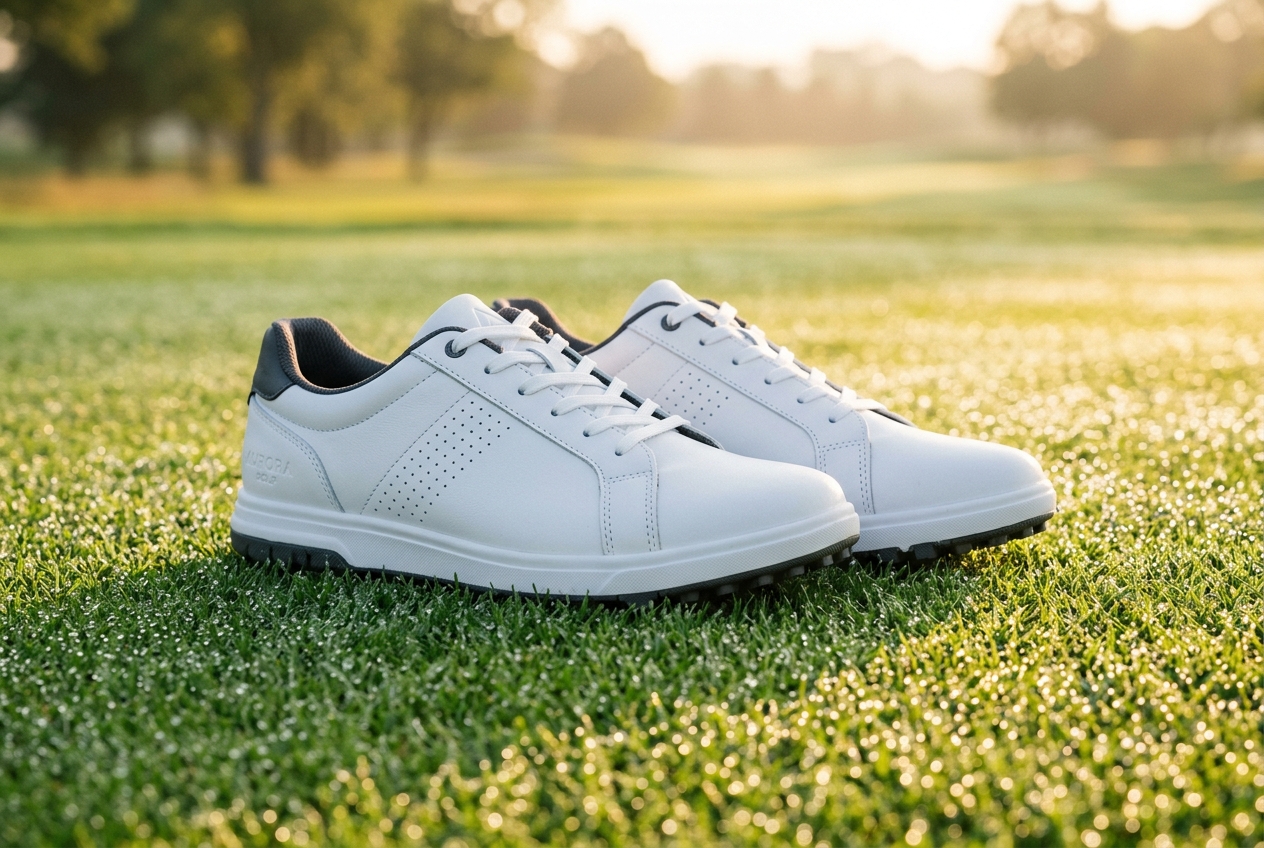
Spikeless golf shoes have crossed a threshold over the past five years: they are no longer a compromise you make for convenience. The best spikeless options today match traditional spiked shoes for traction in normal conditions, outperform them in post-round comfort, and provide something spiked shoes categorically cannot — the ability to walk from the 18th green directly into a restaurant without changing footwear. These ten pairs are the ones worth your attention in 2026.
The 10 Best Spikeless Golf Shoes
1. Ecco Biom C4
Ecco's approach to golf shoes begins with a walking shoe philosophy rather than a golf-specific performance brief — and the Biom C4 is the fullest expression of that philosophy in their lineup. The Biom Natural Motion technology is built around a rocker sole geometry that promotes heel-to-toe movement in a way that reduces cumulative fatigue over the course of 18 holes. For golfers who walk regularly — and there are compelling reasons to do so — this engineering decision pays dividends that compound over the back nine when traditional golf shoes begin to feel heavy and unyielding.
The upper is Ecco's proprietary yak leather, which is softer and more supple than cowhide from the first wear. Most golf shoes require a meaningful break-in period; the Biom C4 requires none in any practical sense — you can wear them for a full round on day one without blistering. The GORE-TEX membrane provides Category 1 waterproofing that keeps feet dry in sustained dewy morning conditions and light to moderate rain, with breathability that prevents the sauna effect that non-breathable waterproof shoes produce on warmer days.
The spikeless outsole uses Ecco's BIOM Hybrid sole — a combination of larger grip lugs at the heel and toe for stability through the swing and a more flexible midfoot section that allows the natural flex of a walking stride. On firm fairways and dry greens, the traction is excellent. On wet bent grass greens — the genuine test for spikeless shoes — the Biom C4 performs better than most competitors, though it still sits a notch below what a fresh set of Softspikes provides in genuinely slippery conditions. For 95% of courses in 95% of conditions, it provides more than adequate grip.
At $200 to $230, the Biom C4 sits at the premium end of the spikeless market. The price is justified by the quality of materials (yak leather, GORE-TEX), the construction standards that Ecco applies from their Scandinavian manufacturing heritage, and the durability — these shoes last considerably longer than most golf footwear when properly maintained. If you walk 18 holes regularly and foot comfort over the full round matters to you, the Biom C4 is the recommendation without reservation.
Pros
- Rocker sole geometry reduces walking fatigue
- Yak leather upper — no break-in required
- GORE-TEX waterproofing with real breathability
- Excellent durability — built to last multiple seasons
- Naturally wide toe box suits broader feet
Cons
- $200+ is premium pricing
- Conservative styling may not suit all tastes
- Heavier than minimalist spikeless options
2. Nike Air Zoom Infinity Tour NEXT%
Nike's Air Zoom Infinity Tour NEXT% is the company's most advanced spikeless golf shoe and the strongest performer in this guide for golfers who prioritize swing dynamics and responsiveness over walking-specific comfort. The combination of a full-length React foam midsole and a forefoot Air Zoom unit provides a level of cushioning and energy return that competes directly with athletic running footwear — unusual in golf shoes, which have historically prioritized stability over cushioning. The result is a shoe that feels energetic and responsive rather than planted and inert.
The Infinity outsole is Nike's primary traction innovation — a full-coverage rubber outsole with directional traction elements that are positioned specifically at the points of highest load during the golf swing: the inside edge of the lead foot at impact, the outside edge of the trail foot at address, and the toe box during the follow-through. The pattern is the result of genuine biomechanical engineering rather than aesthetic arrangement of generic traction lugs. On dry courses it performs outstandingly. On damp morning greens it holds well. In genuinely wet conditions it is adequate but not outstanding.
The upper uses Nike's knit-and-leather hybrid construction — a knit inner sock connects seamlessly to a leather outer overlaid at the high-wear zones. This construction gives the NEXT% an athletic profile that reads more running shoe than traditional golf shoe, which matters for golfers who want footwear that transitions credibly from the course to the gym or casual setting. Waterproofing is provided by a water-repellent treatment rather than a membrane — adequate for light moisture but not suited to a rain round. At $160 to $185, the Nike Air Zoom is exceptional value for its performance tier.
Pros
- React foam + Air Zoom unit: exceptional cushioning
- Infinity outsole engineered for swing biomechanics
- Athletic profile transitions off-course well
- Strong value at the performance tier
- Excellent for golfers who ride and walk alternately
Cons
- Water-repellent only — not waterproof for rain rounds
- Athletic aesthetic won't suit traditional clubs
- Sizing runs slightly narrow
3. G/FORE Gallivanter
G/FORE launched the Gallivanter with a clear and confident proposition: a golf shoe with genuine fashion credibility that performs on the course without apology. Five years on, that proposition has been validated by both the tour professionals who wear them and the fashion-conscious golfer demographic that has made them one of the most visible shoes on social media golf content. The Gallivanter is the shoe you buy when both visual distinction and on-course performance matter in equal measure.
The full-grain leather upper is the foundation — premium tannery-sourced leather that develops a patina with wear rather than simply degrading. G/FORE's colorway range for the Gallivanter is the broadest of any shoe in this guide: bold color-blocked combinations, subtle tonal options, and collaborations that regularly sell out. The shoe appears in the pro shop with a different energy than most golf footwear. For golfers who view their outfits as a form of personal expression — and women's golf in particular has embraced this philosophy — the Gallivanter delivers distinctively.
The G/FORE MG4+ outsole is a genuine performer, not just a fashion afterthought. The multi-directional traction elements are positioned well for golf swing stability, and the Ortholite footbed provides legitimate cushioning for walking golfers. The waterproofing uses a proprietary G/FORE membrane that handles dewy morning courses reliably; in sustained rain it performs adequately but not at the Ecco Biom C4 level. At $225 to $250, the Gallivanter commands a premium — and delivers on it in material quality and distinctive design.
Pros
- Most distinctive visual design in this guide
- Full-grain leather develops character over time
- Broadest colorway selection in spikeless category
- Genuine on-course performance — not style-only
- Ortholite cushioning for walking comfort
Cons
- Most expensive shoe in this guide
- Bold colorways may not suit traditional dress codes
- Waterproofing adequate but not best-in-class
4. FootJoy Pro|SL
FootJoy's Pro|SL is the gold standard for traditional golfers transitioning from spiked footwear to spikeless — it provides the most recognizable FootJoy aesthetic, the most conservative colorway range, and the brand trust that decades of tour-level performance has built. For golfers at traditional private clubs where the aesthetic expectations lean toward understated quality, the Pro|SL is frequently the easiest spikeless option to introduce without raising eyebrows.
The ChromoSkin leather upper is FootJoy's proprietary water-repellent leather — it doesn't require the heavy coating treatments that generic leather uppers need to repel moisture, because the ChromoSkin tanning process incorporates water repellency into the leather itself. The practical result is a leather upper that stays lighter in wet conditions than equivalents, doesn't require post-round waterproofing treatment, and maintains its shape better over multiple seasons. The Pro|SL is also one of the few spikeless shoes available in genuinely wide widths (E and EE), which makes it the default recommendation for golfers with broader feet.
The Infinity Outsole System uses a full-coverage rubber compound with strategically placed traction elements that are deliberately not as aggressive as the Nike Infinity outsole — FootJoy prioritizes smoothness underfoot and walking comfort alongside traction. The result is a shoe that feels more like a dress shoe in terms of walking feel than the athletic shoes in this guide, which suits some golfers perfectly and feels insufficiently cushioned to others. Know your preference before buying.
Pros
- ChromoSkin leather — inherently water-repellent
- Available in E and EE wide widths
- Conservative aesthetic suits traditional clubs
- FootJoy reliability and brand trust
- Strong mid-range value
Cons
- Less cushioning than athletic-style competitors
- Conservative aesthetic may bore fashion-focused golfers
- Outsole traction adequate but not class-leading
5. Adidas Tour360 Spikeless
The Adidas Tour360 platform has been a tour staple for years in spiked form — the spikeless version applies the same stability-focused engineering philosophy to a walking-friendly outsole configuration. The defining feature of the Tour360 system is the 360-degree WRAP support structure: a framework that wraps around the entire midfoot and heel to provide the kind of lateral stability that matters during the weight shift of the golf swing. Golfers with lower-back sensitivity or who have struggled with foot fatigue during longer rounds often find the Tour360's stability architecture genuinely helpful.
Adidas pairs the WRAP support system with their Lightstrike cushioning midsole, which provides a responsive underfoot feel without the softness that can compromise stability. The result is a shoe that feels stable during the swing without feeling rigid during the walk between shots — a meaningful balance that some competitors sacrifice in one direction or the other. The spikeless outsole uses Adidas's Traxion Infinity pattern, which prioritizes consistent contact surface over aggressive individual traction elements.
The upper construction uses a combination of leather panels and textile overlays — practical and durable rather than premium in feel. The waterproofing uses Adidas's Climaproof treatment, which handles morning dew and light rain well but is not a full waterproof membrane. For golfers in reliably dry climates or those who don't play in rain, this is entirely adequate; for wet-climate golfers, consider the GORE-TEX version if available in your region.
Pros
- 360-degree WRAP support — best stability in this guide
- Lightstrike cushioning balances comfort and stability
- Tour-tested platform with proven engineering
- Traxion Infinity outsole consistent in varied conditions
Cons
- Upper materials not as premium as leather-upper competitors
- Climaproof water-resistance only — not waterproof
- Heavier than minimalist options
6. TravisMathew The Daily II
TravisMathew names this shoe "The Daily" for a reason: it is designed to be worn every day, golf course included, rather than a dedicated golf shoe that happens to work off the course. The shoe's profile — a low-top sneaker silhouette with a clean upper and understated branding — reads as casual footwear that passes golf dress code requirements rather than golf equipment with concessions to off-course wear. For the golfer who plays morning rounds three times a week and runs errands or has lunch afterward in the same clothes, this is a genuinely useful design philosophy.
The outsole provides adequate golf traction on firm to moderately soft conditions. It handles dry and lightly damp fairways and greens without issue. In genuinely wet conditions — standing water on fairways, saturated greens — the outsole traction lags behind purpose-engineered golf shoes. Know what you're buying: excellent versatility and casual credibility with golf-adequate (not golf-optimized) traction. Cushioning is solid throughout the daily-wear use case; the midsole handles the varied walking surfaces of an 18-hole round without complaint.
At $130 to $150, The Daily II is among the most accessible options in this guide for a shoe that genuinely looks good off the course. The quality of materials at this price point is strong — TravisMathew doesn't cut corners on fabric quality even at mid-range prices. For the casual golfer who values lifestyle integration over maximum performance, this is the right pick.
Pros
- Best casual-to-course transition in this guide
- Accessible price for versatile spikeless
- Understated styling suits varied settings
- Strong material quality for the price tier
Cons
- Traction below purpose-engineered golf shoes
- Not waterproof — avoid for rain rounds
- Less stability than stability-focused competitors
7. TRUE Linkswear Original
TRUE Linkswear occupies a singular position in the golf shoe market: they build genuinely minimalist golf footwear, with a zero-drop sole (heel and forefoot at the same height), a wide anatomical toe box that allows the toes to splay naturally, and a construction philosophy drawn from barefoot running research applied to golf. This is not for every golfer — but for the golfer who values ground feel, proprioception during the swing, and has foot health priorities that conventional golf shoes don't serve, the TRUE Original is the only option worth considering.
The zero-drop sole means you feel the ground more directly than in any other shoe here. For golfers, this can improve swing feel and balance during the weight transfer, because you have better sensory input about where your weight is distributed at each point in the swing. This is not a universal benefit — golfers who rely on substantial heel cushioning for comfort will find the TRUE Original less comfortable than conventional shoes. But for golfers who have come from barefoot or minimalist running backgrounds, the TRUE Original makes golf shoes feel honest rather than overly engineered.
The traction uses a full-ground-contact rubber sole with small traction elements distributed across the entire outsole surface — prioritizing consistent ground contact over aggressive traction lugs. On firm dry turf this is excellent. On wet greens it is adequate but not aggressive. TRUE Linkswear also prioritizes sustainability in their construction — the Original uses eco-conscious materials throughout and is manufactured with a reduced footprint relative to conventional golf shoes.
Pros
- Zero-drop sole improves ground feel and balance
- Wide toe box suits natural foot shapes
- Eco-conscious materials and manufacturing
- Excellent for golfers with foot-health priorities
Cons
- Not for golfers who prefer substantial cushioning
- Requires adaptation period from conventional shoes
- Limited retail availability — online primary channel
8. New Balance Fresh Foam LinksSL
New Balance brings the Fresh Foam midsole technology from their acclaimed running shoe line directly into the LinksSL, and the result is one of the most comfortable walking golf shoes in this guide at a mid-range price point. The Fresh Foam compound is New Balance's premium cushioning material — a single-piece injection-molded foam that provides a softer, more cushioned underfoot feel than the harder compounds used in stability-focused golf shoes. For the golfer who walks 18 holes multiple times per week, the cumulative difference in foot fatigue at the end of a round is noticeable.
New Balance also applies their wide-fit expertise from athletic footwear to the LinksSL — it is available in D (standard), 2E (wide), and 4E (extra-wide) widths, making it one of the most accessible options for golfers with broader feet alongside the FootJoy Pro|SL. The upper uses a combination of premium synthetic leather and textile panels that are water-repellent without being fully waterproof. The outsole traction is engineered for golf use without the aggressive athletic look of the Nike options — it sits visually closer to a traditional golf shoe than a running shoe.
At $120 to $145, the Fresh Foam LinksSL is the best value for walking-comfort-prioritized golfers who also need wide sizing options. The combination of Fresh Foam cushioning, genuine wide-width availability, and clean traditional styling makes it an easy recommendation for the golfer who has struggled to find comfortable, properly-fitting golf footwear.
Pros
- Fresh Foam cushioning — outstanding walking comfort
- Wide sizing up to 4E — best wide availability
- Mid-range price for premium-feel walking shoe
- Traditional styling suits most clubs
Cons
- Water-repellent only — not waterproof
- Softer feel may compromise stability for some swing styles
- Less performance-optimized outsole
9. Puma Ignite Articulate
Puma's Ignite Articulate uses the brand's proprietary IGNITE foam — a high-energy-return cushioning compound that was developed initially for their running line and adapted for golf use. The "Articulate" designation refers to the segmented outsole construction, where the outsole is divided into independent flex zones that allow the shoe to bend naturally through the walking stride while maintaining structural rigidity in the heel and forefoot zones that support the golf swing. This articulation is particularly noticeable when walking down slopes or on uneven terrain, where the shoe moves with the foot rather than fighting it.
Puma positions the Ignite Articulate as a tour-performance shoe with accessible pricing — and the performance largely backs the positioning. The traction is solid across varied turf conditions, the IGNITE foam provides genuine energy return that reduces fatigue over the back nine, and the upper construction uses materials that hold up to regular use without premature degradation. The aesthetic is athletic and modern, which suits golfers who prefer sportswear-influenced footwear and may not be appropriate at the most traditional private clubs.
At $130 to $155, the Ignite Articulate competes directly with the New Balance Fresh Foam LinksSL and TravisMathew The Daily II at similar price points. The Puma wins on traction performance and the articulated outsole walking comfort; the New Balance wins on wide-size availability; the TravisMathew wins on lifestyle versatility. Know your priority before choosing between them.
Pros
- IGNITE foam provides energy-return cushioning
- Articulated outsole excellent on slopes
- Strong traction for the price point
- Good durability from upper construction
Cons
- Athletic aesthetic won't suit traditional clubs
- Not available in wide sizes
- Water-repellent only
10. Cole Haan OriginalGrand Golf
Cole Haan approaches the golf shoe from the opposite direction of most brands: rather than starting with a golf shoe and making it look more casual, they started with a dress shoe and made it functional on the course. The OriginalGrand Golf uses the same Grand.OS technology that makes their dress shoes comfortable for all-day walking — a cushioned footbed, flexible construction, and lightweight build — applied to a shoe with a golf-specific outsole. The visual result is a shoe that looks like a dress shoe or refined casual leather sneaker, not a golf shoe. At traditional private clubs with conservative dress codes, the OriginalGrand Golf passes effortlessly.
The traction is provided by a rubber outsole with small traction elements that handle typical course conditions adequately. It is not engineered for maximum golf performance — the outsole prioritizes visual discretion over aggressive grip — so golfers with fast swings or who play frequently on soft wet conditions will eventually notice the comparative limitation. The leather upper is premium quality, properly waterproofed for moderate conditions, and maintains a business-casual aesthetic that allows the shoe to work from the course directly to a client dinner.
The OriginalGrand Golf is the recommendation for golfers who play regularly at formal clubs, who often go directly from golf to professional or social settings, and who want a single pair of shoes that handles both without the visual compromise of wearing obvious golf footwear to dinner. Its performance ceiling is below the athletic-focused shoes in this guide — buy it for the dress code compliance and lifestyle flexibility, not for maximum traction.
Pros
- Genuine dress shoe aesthetic passes any dress code
- Grand.OS comfort technology for all-day wear
- Course-to-formal dinner without changing
- Premium leather quality
Cons
- Outsole traction below purpose-built golf shoes
- Not for wet conditions or aggressive swing styles
- Visual discretion limits performance optimization
Traction: How Spikeless Outsoles Actually Work
The question every golfer asks when considering spikeless shoes — "will they be as grippy as my spiked shoes?" — has an honest and nuanced answer. In dry to moderately damp conditions on well-maintained courses, a quality spikeless outsole provides traction that is functionally equivalent to spiked footwear for the vast majority of recreational golfers. In genuinely wet conditions — saturated greens, morning dew on links courses, standing water on fairways — spiked shoes provide measurably better grip, particularly for golfers with high swing speeds who generate more lateral force during the swing.
The mechanism matters: traditional spikes (Softspikes, Champ) work by penetrating the turf surface, creating physical anchoring points. Spikeless outsoles work through surface-area contact — the rubber compound and traction elements grip the turf surface rather than penetrating it. On dry turf, both approaches provide excellent grip. On wet turf, the penetration approach of spiked shoes maintains grip more reliably because the grip doesn't depend on the friction coefficient of wet rubber against wet grass.
The geometry of the traction elements matters significantly. Uniform small-radius nubs arranged in a regular grid — what you find on many budget spikeless shoes — provide less directional traction than angled lugs positioned specifically at the load-bearing points of the golf swing. The Nike Infinity outsole and Adidas Traxion Infinity pattern both use biomechanical research to position traction elements where the foot actually applies force during the swing. This engineering investment translates to meaningfully better grip compared to generic nub patterns at equivalent rubber hardness.
Rubber compound hardness also affects traction — softer rubber provides better grip on hard surfaces but wears faster. Most premium spikeless shoes use a multi-durometer outsole: softer rubber at the traction elements, harder rubber in the structural zones that bear the most abrasion from walking. Budget spikeless shoes often use a single compound throughout, compromising either durability or traction in the process.
The practical implication: if you play regularly in wet conditions on soft-turf courses, keep a pair of spiked shoes for those rounds and use spikeless for the majority of rounds in better conditions. If you play primarily in dry climates or on firm-turf courses, spikeless provides all the grip you need. The idea that you must choose one or the other permanently is a false dichotomy.
Waterproofing vs Breathability Trade-offs
Waterproof golf shoes use one of two approaches: a waterproof membrane bonded to the inside of the upper (GORE-TEX in the Ecco Biom C4, proprietary membranes in some others), or a water-repellent treatment applied to the outer surface of the upper leather or synthetic. These are functionally different technologies with different performance characteristics — and the trade-offs matter for how you select footwear.
Membrane-waterproofed shoes provide categorical waterproofing: water cannot penetrate the membrane regardless of how long you stand in water. The trade-off is breathability — membranes restrict moisture vapor transmission, which means sweat vapor from your foot has difficulty escaping. In warm weather (above 70°F), this can make membrane-waterproof shoes uncomfortable. GORE-TEX membranes minimize this trade-off better than most alternatives, but some restriction is inherent to the technology.
Water-repellent treated uppers bead and shed water in light conditions but eventually soak through in sustained exposure. The advantage is superior breathability — the untreated leather or synthetic breathes naturally, keeping feet cooler in warm weather. DWR treatments on golf shoes also degrade over time and require periodic re-application. For golfers in warm, dry climates, water-repellent treated shoes are frequently the more comfortable choice — they handle the occasional morning dew that constitutes their main moisture challenge without the breathability sacrifice of a membrane.
The decision framework: if you play regularly in rain or sustained wet conditions, invest in membrane-waterproof shoes (Ecco Biom C4, FootJoy Pro|SL with waterproof option). If you play primarily in dry or warm conditions and encounter moisture only occasionally, water-repellent treated shoes are sufficient and more comfortable. If you play in both conditions, consider two pairs — one breathable for dry conditions, one membrane-waterproof for wet rounds.
The Course-to-Clubhouse Advantage
The practical advantage that spikeless shoes offer over spiked alternatives — and it is a genuine, meaningful advantage — is the ability to walk from the 18th green directly into the clubhouse, bar, restaurant, or hotel lobby without changing footwear or damaging hardwood floors. Spiked shoes require either changing into street shoes or clomping awkwardly on metal or plastic cleats across surfaces not designed for them. If you play frequently and often transition to social settings afterward, this convenience compounds significantly over a season.
Not all spikeless shoes transition equally well. The athletic-profile shoes — Nike Air Zoom Infinity Tour NEXT%, Puma Ignite Articulate — transition well to casual and sporting settings but less credibly to business or formal contexts. The leather-upper traditional-styled shoes — FootJoy Pro|SL, Ecco Biom C4, Cole Haan OriginalGrand Golf — pass in most settings with ease. The G/FORE Gallivanter occupies a distinctive fashion position that works in upscale casual settings. The TravisMathew Daily II is intentionally casual, which works in casual settings and not in formal ones.
The private club context deserves specific mention. Most private clubs allow spikeless shoes in the dining room and lounge areas as a matter of course — the primary concern driving the "please change your shoes" rule has always been spike damage to hardwood floors, not the shoe style itself. A clean pair of traditional-styled spikeless shoes in the dining room at a formal club is unremarkable. A pair of bright athletic-profile spikeless shoes may still draw a glance, even if they're technically compliant with the no-metal-spikes rule. When in doubt, call the club's pro shop before your round.
All 10 Spikeless Shoes Compared
| Shoe | Price | Waterproofing | Wide Sizes | Best For | Rating |
|---|---|---|---|---|---|
| Ecco Biom C4 | $200–$230 | GORE-TEX membrane | Naturally wide toe box | Walking comfort | 4.9 |
| Nike Air Zoom Infinity NEXT% | $160–$185 | DWR treatment | Narrow — size up | Performance feel | 4.8 |
| G/FORE Gallivanter | $225–$250 | Proprietary membrane | Standard widths | Style + performance | 4.8 |
| FootJoy Pro|SL | $145–$170 | ChromoSkin DWR | E and EE available | Traditional styling | 4.7 |
| Adidas Tour360 Spikeless | $175–$210 | Climaproof DWR | Standard widths | Stability | 4.7 |
| TRUE Linkswear Original | $155–$180 | DWR treatment | Wide toe box design | Minimalist feel | 4.7 |
| TravisMathew The Daily II | $130–$150 | DWR treatment | Standard widths | Course-to-casual | 4.6 |
| New Balance Fresh Foam LinksSL | $120–$145 | DWR treatment | 2E and 4E available | Walking comfort + wide | 4.6 |
| Puma Ignite Articulate | $130–$155 | DWR treatment | Standard widths | Value performance | 4.5 |
| Cole Haan OriginalGrand Golf | $150–$175 | Leather DWR | Standard widths | Dress code + formal | 4.5 |
Frequently Asked Questions
Are spikeless golf shoes as good as spiked on wet courses?
In most real-world conditions, quality spikeless shoes provide adequate traction for recreational play. In genuinely wet conditions — saturated greens, heavy morning dew on links courses, or sustained rain — spiked shoes with fresh Softspikes provide measurably better grip, particularly for golfers with high swing speeds who generate more lateral foot force. If you play frequently on soft, wet courses, keep a pair of spiked shoes for those rounds. If your typical course is firm and your conditions are moderate, spikeless is entirely sufficient.
Can you wear spikeless golf shoes on any course?
Yes — all of the courses that ban metal spikes (which is the vast majority of courses in the US and increasingly worldwide) allow spikeless shoes. A small number of traditionalist clubs previously required metal spikes, but these are now extremely rare. Most courses welcome spikeless shoes specifically because they cause less turf damage than spiked footwear in certain conditions. If you're concerned about a specific club's policy, call their pro shop — it takes two minutes and prevents an awkward moment at the first tee.
How long do spikeless golf shoes last?
The outsole traction elements wear faster than the spikes on spiked shoes — there's no replacing them as you can replace worn spikes. Expect 50-80 rounds from a quality spikeless shoe before the traction elements wear noticeably. Premium shoes with harder rubber compounds (Ecco, FootJoy) tend to last longer. The upper leather or synthetic typically outlasts the outsole traction. Store your shoes with shoe trees to maintain the upper shape between rounds, clean mud and grass off the outsole after each round, and re-apply DWR treatment annually on water-repellent treated shoes.
Are spikeless shoes better for walking 18 holes?
Often yes — particularly the shoes in this guide that were specifically designed with walking in mind (Ecco Biom C4, New Balance Fresh Foam LinksSL, TRUE Linkswear Original). The rocker sole geometry of the Ecco and the Fresh Foam cushioning of the New Balance reduce the cumulative fatigue of 18 holes in a way that most spiked shoes don't approach. However, not all spikeless shoes are walking-optimized — some are simply athletic performance shoes without spikes. Match the shoe to your primary use case: walking-focused golfer prioritizes comfort engineering; riding golfer prioritizes swing feel and traction.
Can you wear spikeless golf shoes off the course?
Absolutely — this is one of the primary advantages of quality spikeless shoes. The degree of off-course versatility depends on the shoe's styling. The Cole Haan OriginalGrand Golf passes as dress casual footwear. The G/FORE Gallivanter works in upscale casual settings. The TravisMathew Daily II is specifically designed as an everyday shoe. The athletic-profile Nike and Adidas options work in sporting and casual contexts. The FootJoy Pro|SL reads clearly as a golf shoe and doesn't transition as credibly to non-golf settings. Choose your level of lifestyle integration at purchase — it matters for the value equation.
GolfClothing.com is reader-supported. When you buy through links on our site, we may earn an affiliate commission at no extra cost to you. Learn more →
Golf Gear Reviews & Shoe Deals
Get curated gear recommendations, seasonal buying guides, and sale alerts from leading golf brands.
Free. No spam. Unsubscribe anytime.