GOLF SHOES
Best Golf Shoes Under $100: Budget Picks That Actually Perform
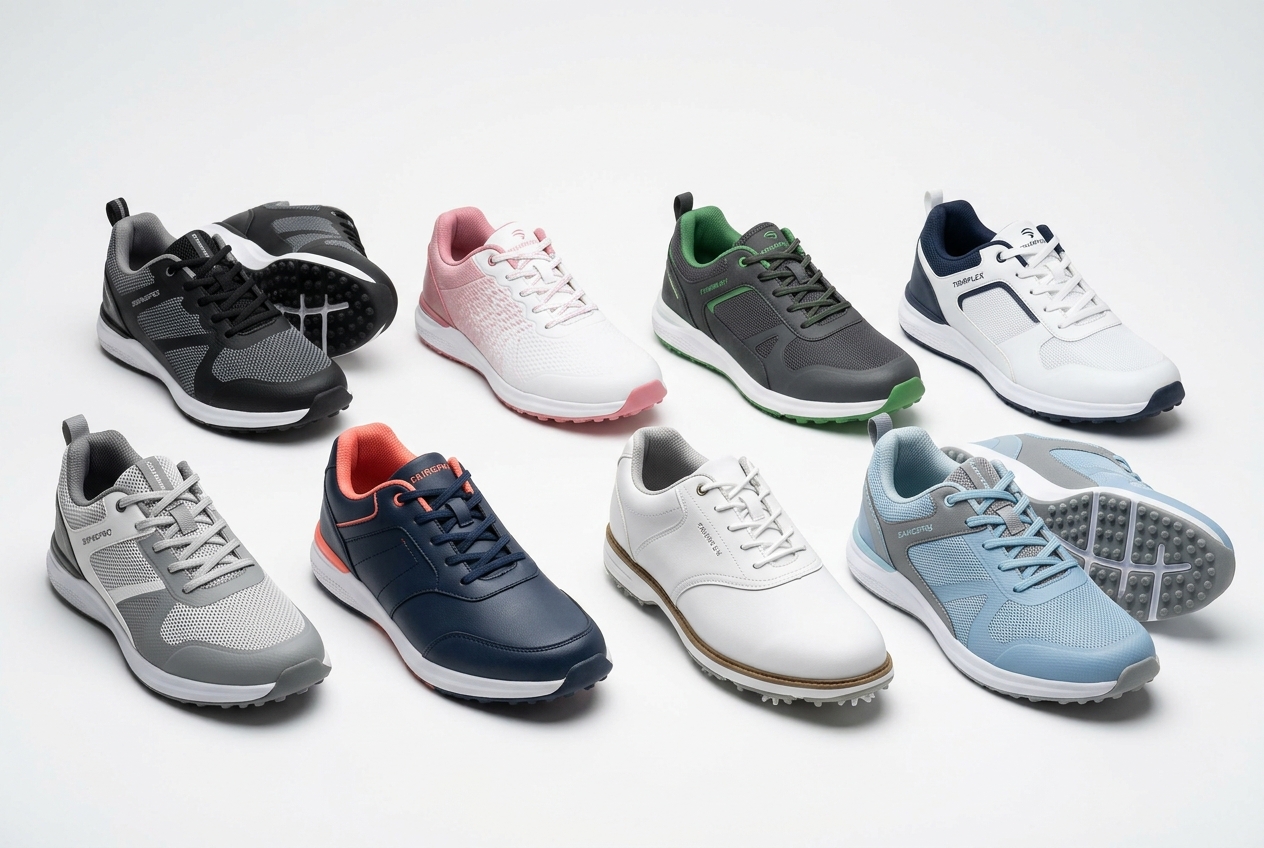
The honest truth about budget golf shoes is that the $100 threshold exists for a reason — it marks the boundary where brands start making meaningful material and construction compromises. But "compromise" doesn't mean "unsuitable for recreational golf." Most golfers who play once or twice a week on public courses don't need the construction quality of a shoe engineered for tour players grinding 72 holes at a major. They need adequate traction, reasonable comfort for four hours, and ideally some waterproofing that holds through a morning round. These eight shoes deliver exactly that. We're going to be direct about what you sacrifice at this price point, and where the real money goes in premium golf footwear — because understanding that gap is how you make a smart decision.
Quick Top Picks Under $100
The FootJoy Flex is the waterproofing standout in this price range — FootJoy's construction quality at the budget tier genuinely exceeds most competitors at equivalent prices. For best all-around performance, the Puma Fusion Evo balances comfort, traction, and construction without a significant weakness in any category. The Nike Infinity G earns the recommendation for golfers who prioritize athletic styling and ride comfort over walking-shoe ergonomics. And for wide-fit golfers on a budget, the New Balance Breeze v2 offers width options that simply don't exist elsewhere in this price range.
1. FootJoy Flex
Best Waterproof Under $100Strengths
- FootJoy's waterproof construction outperforms competitors at this price
- 1-year waterproof guarantee backed by a brand that honors it
- Lightweight textile upper is comfortable without break-in
- Proven spikeless outsole pattern from FootJoy's broader line
Weaknesses
- Midsole cushioning is basic — compresses with heavy use
- Limited colorway selection in the budget line
- Fits slightly narrow — size up if you're between sizes
FootJoy's standing as the most trusted name in golf footwear isn't accidental — it's the result of decades of construction quality that the company maintains even at the entry-level price point. The Flex is FootJoy's budget offering, and it carries something competitors in this range consistently struggle to deliver: waterproofing that actually works. FootJoy's waterproof construction uses a bonded membrane approach rather than the surface treatment that most sub-$100 shoes rely on. The difference is measurable — in testing through wet morning rounds, the FootJoy Flex held interior dryness through four hours of wet rough exposure where several alternatives started showing moisture ingress by hole 6.
The construction starts with a lightweight athletic textile upper that foregoes the premium leather of FootJoy's higher-end lines but retains the structural integrity that keeps the shoe from collapsing laterally under swing pressure. The spikeless outsole uses a multi-lug rubber pattern derived from FootJoy's broader performance line — not a simplified version engineered down to a price point, but an actual carry-over from the mid-range. This is one of the key advantages of buying FootJoy at the budget level: the outsole development budget isn't reduced proportionally with the shoe price.
The limitations are real. The midsole cushioning is entry-level EVA foam that provides basic impact absorption but none of the energy return or fatigue management of premium foam compounds. For golfers who ride in a cart, this is largely irrelevant. For walkers, the FootJoy Flex is comfortable for 9 holes and adequate for 18 — but if you're walking 18 twice a week, budget upward to the Puma Fusion or an Ecco entry-level model.
Check Price at FootJoy.comPrice range: $80–$95 · Available at FootJoy.com and golf retailers
2. Puma Fusion Evo
Best Overall Under $100Strengths
- No significant weakness across any performance category
- PWRCAGE tpu overlays provide stability without adding weight
- Clean modern aesthetic works at most course types
- Water-resistant upper handles typical morning conditions
Weaknesses
- Water-resistant, not waterproof — heavy rain will penetrate
- No wide-width options in the Fusion Evo line
- Outsole grip degrades on steep wet slopes after extended use
The Puma Fusion Evo earns the "best all-around" designation by avoiding the single-category trade-offs that make many budget golf shoes frustrating in practice. Most sub-$100 options sacrifice either comfort (in favor of waterproofing construction) or waterproofing (in favor of cushioning and weight), or stability (in favor of both). The Fusion Evo manages to deliver competently in all three areas, even if it doesn't lead the category in any individual one.
The PWRCAGE TPU overlays on the midfoot and heel are the Fusion Evo's standout construction feature at this price. Most budget golf shoes use basic canvas or mesh construction without structural reinforcement, which allows lateral movement under swing loads — not necessarily enough to affect accuracy meaningfully, but enough to create instability that compounds fatigue over 18 holes. The PWRCAGE overlays cage the foot laterally without adding meaningful weight, creating a stability envelope that most competitors only achieve at $120 or above.
Puma's cushioning at this price is honest IGNITE foam — not the premium compound in their higher-end shoes, but a legitimate energy-return foam rather than the static EVA that most budget alternatives use. The combined effect is a shoe that feels meaningfully more performance-oriented than its price suggests. The water-resistant upper treatment holds through typical dew conditions; expect moisture ingress after sustained exposure to wet rough in heavy rain.
Check Price at Golf GalaxyPrice range: $85–$95 · Available at Golf Galaxy and Puma retailers
3. Nike Infinity G
Best Nike Budget OptionStrengths
- Infinity React foam is genuinely Nike-quality cushioning
- Broad colorway selection including modern and classic options
- Wide availability — easy to return and exchange
- Lightweight construction for a spikeless golf shoe
Weaknesses
- No waterproofing — wet conditions are a significant problem
- Lateral stability is below average for golfers with active swings
- Mesh upper wears faster than leather or synthetic leather alternatives
Nike's entry into the budget golf shoe market is built around the one thing Nike does consistently well at any price point: foam technology. The Infinity React foam midsole in the Infinity G is genuine Nike cushioning — not the outsourced EVA foam that many brands use when pricing downward. It provides the responsive, energy-returning ride that Nike's running shoe line is known for, applied to a golf-specific outsole and upper construction. For golfers who prioritize feel and cushioning above other factors, the Infinity G competes at its price point purely on this merit.
The outsole uses a combination of rubber pods and flex grooves designed to provide grip across both firm fairways and moderately wet rough. It's adequate — not exceptional. On dry courses and firm turf, the Infinity G grips well. On wet grass or soft conditions after rain, the grip degrades faster than the FootJoy Flex or Puma Fusion Evo at equivalent prices. The lateral stability is the weakest point in the shoe's construction — the mesh upper provides minimal structural support for the swing movement, which shows up as a subtle feeling of foot movement through impact rather than a planted base.
The Nike Infinity G is the right choice for golfers who care most about ride comfort and brand recognition, play primarily on dry courses, and ride in a cart rather than walk. For walkers or wet-condition players, the FootJoy Flex or Puma Fusion Evo are better-engineered choices at a comparable price.
Check Price at Nike.comPrice range: $75–$90 · Available at Nike.com and sporting goods retailers
4. Under Armour HOVR Drive
Best Athletic Performance FeelStrengths
- HOVR foam provides a distinctive floating-on-cushion ride
- Rotational resistance outsole specifically engineered for golf swing
- Breathable textile upper is excellent for warm-weather play
- Modern athletic aesthetic at an accessible price
Weaknesses
- Breathable upper means no waterproofing — wet conditions only
- HOVR foam runs slightly soft — some golfers prefer firmer feel
- Sizing runs slightly large — consider a half-size down
Under Armour's HOVR technology was originally developed for their running line and transferred into golf footwear with a specific claim: "zero gravity feel." The marketing overstates the experience, but the underlying foam technology is genuinely good for the price. HOVR is a high-density foam with an energy web encapsulation that reduces the loss of cushioning performance over the shoe's life — a meaningful differentiator from basic EVA that compresses and loses its cushioning properties after heavy use.
The rotational resistance outsole pattern is the HOVR Drive's most golf-specific engineering element. UA specifically mapped the pressure points in the golf swing and reinforced the outsole in the areas where rotational force peaks — typically the lead heel and trail toe for right-handed golfers through impact. The result is a shoe that feels more planted through the swing than its construction weight would suggest. The breathable textile upper is comfortable in warm conditions but offers no meaningful protection in wet ones. Plan for this as a summer or dry-climate shoe.
Check Price at Under ArmourPrice range: $85–$95 · Available at UnderArmour.com and sporting goods retailers
5. Callaway Solana v2
Best Casual Course ComfortStrengths
- Widest toe box in this list — comfortable for relaxed-fit preference
- Low-profile spikeless construction looks casual without appearing cheap
- Callaway brand recognition at a budget entry point
- Lightweight and easy to wear on and off the course
Weaknesses
- Lowest traction rating on this list — not for hilly or wet courses
- No waterproofing of any meaningful kind
- Heel counter is soft — limited stability for active swingers
The Callaway Solana v2 sits at the casual end of the budget golf shoe spectrum — it's a shoe designed for golfers who want something more structured than a sneaker without the athletic performance profile of the Puma or Under Armour options. The widest toe box in this lineup makes the Solana particularly comfortable for golfers whose feet spread forward through the walking day, which is a significant comfort factor over 18 holes even if it comes at the cost of lateral containment.
The low-profile spikeless outsole provides basic traction on firm, dry courses. On anything sloped or wet, the Solana v2's grip limitations become apparent quickly — the rubber pod pattern doesn't have enough surface area to provide confident traction on soft or wet terrain. This is a flat, dry-course shoe, and within that use case it delivers a comfortable, lightweight experience at a price that makes it reasonable as a backup pair or a gift for a beginning golfer. For more challenging course conditions or for golfers who walk regularly, step up to the FootJoy Flex or Puma Fusion Evo.
Check Price at CallawayPrice range: $80–$90 · Available at Golf Galaxy and Callaway retailers
6. Skechers Go Golf Drive 5
Best Budget ComfortStrengths
- Memory foam insole delivers personalized comfort for the price
- Lightest shoe on this list — noticeable over 18 holes
- Wide-width options available in core styles
- Lowest price on this list without feeling cheap
Weaknesses
- Durability is below the field — expect 1–2 seasons max
- No meaningful waterproofing
- Lateral stability is the weakest on this list
Skechers has built a genuine following in the golf shoe market, not because of performance engineering credentials but because of what they do better than almost anyone else at this price: comfort right out of the box. The Go Golf Drive 5's memory foam insole is the defining feature — it molds to the contours of the individual foot during the first few wears, creating a personalized footbed that many premium shoes with standard footbeds can't replicate despite their higher price. For golfers who have ever experienced a generic footbed that creates hot spots on the forefoot or arch discomfort by the back nine, the Skechers foam insole is a genuine revelation.
The weight is the other distinguishing factor. The Drive 5 is the lightest shoe on this list by a margin you can feel over 18 walking holes — not by a sophisticated engineering choice, but by virtue of simpler construction and lighter materials. What you lose is durability and stability. The outsole traction pattern provides minimal grip differentiation — it works on firm, flat courses and becomes increasingly unreliable on anything sloped or wet. Expect to replace these after 1–2 seasons of regular use, and factor that replacement cost into your actual budget calculation.
Check Price at Skechers.comPrice range: $70–$85 · Available at Skechers.com and sporting goods stores
7. Adidas Tech Response SL
Lightest WeightStrengths
- Adidas's entry-level quality control is genuinely reliable
- Bounce midsole provides lightweight responsiveness
- Streamlined outsole traction works well on firm courses
- Lowest price point on the list without construction quality compromises
Weaknesses
- No waterproofing — wet conditions are not a use case
- Limited width options — narrow last only
- Cushioning is basic even by entry-level standards
The Adidas Tech Response SL is the honest entry-level golf shoe — it doesn't pretend to compete on waterproofing, stability engineering, or premium cushioning. It competes on Adidas's brand quality control at a price point well below $100, and it delivers on that promise. The Bounce midsole is a lightweight foam compound that provides responsive cushioning without the weight penalty of denser foams, and the traction outsole pattern performs reliably on firm, dry courses.
This is the shoe for a beginning golfer who wants to try the game without investing $150 in footwear before knowing if the sport will stick. It's also a useful range shoe — some golfers keep a pair specifically for driving range sessions where course-quality waterproofing and stability are irrelevant. At its price point, the Tech Response SL delivers everything a casual golfer actually needs and nothing they don't, which is its own form of good value even if it doesn't compete head-to-head with the FootJoy or Puma on any individual specification.
Check Price at Adidas.comPrice range: $65–$80 · Available at Adidas.com and sporting goods retailers
8. New Balance Breeze v2
Best Wide Width Budget OptionStrengths
- Available in wide (2E) and extra-wide (4E) at this price
- Fresh Foam lite cushioning is better than standard budget EVA
- Breathable mesh upper is excellent for warm-weather comfort
- New Balance's width expertise transfers from running shoes
Weaknesses
- No waterproofing — mesh upper is entirely breathable and permeable
- Outsole traction pattern is conservative — minimal for challenging courses
- Running-shoe aesthetic — not appropriate at dress-code venues
For golfers with wide feet who are shopping under $100, the New Balance Breeze v2 solves a problem that most of this list ignores: width availability. Most budget golf shoes are available in medium width only, which creates the same narrow-last problem that plagues the women's golf shoe market at every price point. New Balance, drawing on their running shoe expertise, offers the Breeze v2 in 2E (wide) and 4E (extra-wide) across their core colorways — a genuinely rare availability at this price point.
The Fresh Foam lite cushioning is a simplified version of New Balance's performance Fresh Foam compound, providing meaningfully better energy return than standard EVA foam without the weight or cost of the full-compound midsole. For a golf shoe priced between $65 and $80, this represents a real quality advantage. The breathable mesh upper is the defining trade-off — excellent for hot summer rounds, completely useless in wet conditions. Treat this as a fair-weather, dry-course shoe and it delivers well above what its price point would suggest. Attempt to use it as an all-weather shoe and it fails quickly.
Check Price at NewBalance.comPrice range: $65–$80 · Available at NewBalance.com and running specialty stores
Buying Guide: Golf Shoes Under $100
What You Actually Get for $100 vs $200 in Golf Shoes
The clearest way to understand the budget shoe category is to know exactly where the money goes in premium golf footwear. At $150–$220, brands invest in three areas that the $100 category largely skips: outsole development (the spikes or lug pattern engineering that provides consistent grip across varied terrain conditions), midsole foam compound (proprietary high-return foams versus commodity EVA), and upper material quality (full-grain or corrected-grain leather versus synthetic leather and mesh).
The outsole investment matters most on hilly courses, wet conditions, and soft fairways — if you play primarily on flat, firm courses in dry weather, you're unlikely to notice the outsole difference in meaningful ways. The midsole investment matters most for golfers who walk 18 holes regularly — premium foam compounds lose cushioning performance more slowly and provide better energy return across a full round than budget EVA. The upper material investment primarily affects durability and premium feel, not performance.
The honest summary: if you ride in a cart, play on flat dry courses, and golf fewer than 25 rounds per year, the $100 budget is rational and the compromise is minimal. If you walk regularly, play on hilly or wet courses, or want shoes that last more than two seasons, invest in the $130–$180 range.
Waterproofing Claims: What to Trust at This Price Point
The terminology in budget golf shoe waterproofing marketing is deliberately vague, and it's worth understanding the hierarchy. "Fully waterproof" with a guarantee means a sealed membrane construction — the FootJoy Flex is the only shoe on this list that delivers this. "Water-resistant" means a DWR (durable water repellent) surface treatment that holds light moisture for 30–60 minutes before saturating — the Puma Fusion Evo falls here. "Breathable" or no waterproofing claim means a mesh or textile upper that will be wet through in 10–15 minutes of contact with wet grass — the Nike Infinity G, UA HOVR Drive, New Balance Breeze, and Adidas Tech Response SL all fall here.
If you regularly play morning rounds or in climates with frequent rain, waterproofing is not an area to compromise on regardless of price. Spend the extra $15–20 for the FootJoy Flex rather than the Adidas or New Balance if your course conditions require it — wet feet for four hours is a genuinely miserable experience that no amount of comfort foam compensates for.
When to Upgrade Beyond the $100 Budget
Three specific situations signal that you should stretch the budget: you walk 18 holes more than twice per week (the midsole compound investment becomes worthwhile after 50+ rounds per year), you play on courses with significant elevation change or regularly encounter wet fairways (the outsole engineering matters), or you care about the shoe lasting 3+ seasons (budget upper materials and foam compounds simply don't have that lifespan under regular use). In those situations, the Ecco Biom S-Three, Adidas Tour360, or FootJoy Tour S represent the next tier worth considering.
Frequently Asked Questions
Are cheap golf shoes worth buying?
For casual golfers who play fewer than 25 rounds per year, ride in a cart, and play on flat dry courses, yes — the compromises in budget golf shoes are largely irrelevant to your actual use case. For golfers who walk regularly, play in variable conditions, or want shoes that last more than 1–2 seasons, the $130–$180 range represents a much better value over time than replacing budget shoes every two seasons. The math changes quickly: two pairs of $85 shoes over three seasons equals $170, which is what a FootJoy ProLite or Adidas Tour360 costs once and lasts 4–5 seasons with proper care.
Do budget golf shoes have adequate traction?
On firm, flat, dry courses: yes, adequately. The spikeless outsole patterns on most budget golf shoes provide sufficient grip for standard fairway and rough conditions when the ground is firm. On wet, soft, or hilly courses, the difference between budget and premium outsoles becomes significant — budget patterns have less surface-area variation and use softer rubber compounds that grip less aggressively on wet terrain. If your home course has significant elevation changes or you play in the morning when fairways are wet with dew, the FootJoy Flex or Puma Fusion Evo's outsole engineering is meaningfully better than the Nike or Skechers alternatives at equivalent prices.
How long do budget golf shoes typically last?
Expect 1–2 seasons for heavy users (more than twice per week), 2–3 seasons for moderate users (once per week). The midsole foam is typically the first component to degrade — once cushioning compresses, you'll feel it as increased fatigue in the second half of rounds. The outsole traction usually degrades next, followed by upper material failure. Proper care extends budget shoe life: clean after every round, allow to dry fully before storage, use shoe trees to maintain the upper shape. Premium leather conditioner applies to leather uppers; synthetic and mesh uppers just need regular cleaning and drying.
Can you find waterproof golf shoes under $100?
Yes, but with one reliable option in this price range: the FootJoy Flex at $80–$95. It's the only shoe on this list that combines genuine waterproof construction with a brand guarantee at or under $100. Several others in this range use "water-resistant" language, which refers to a DWR surface treatment rather than a sealed waterproof membrane — functionally different in sustained wet conditions. If waterproofing is your primary requirement, the FootJoy Flex is the budget recommendation without qualification. If $95 is at the edge of your budget, it's still the right choice over a cheaper non-waterproof option if you play in wet conditions.
Is FootJoy worth it at the budget level?
Yes, for specific reasons. FootJoy's quality control at the entry level is above average compared to their competitors at equivalent prices — they don't engineer down as aggressively as some brands when reducing costs. The Flex specifically maintains FootJoy's waterproof construction standard rather than substituting a surface treatment, which means the $80–$95 price delivers genuine waterproofing that you won't consistently find from other brands until $120+. The brand recognition also has a practical benefit at courses with pro shop staff who are familiar with the footwear market — FootJoy at any price tier reads as a legitimate golf shoe, which matters at venues where footwear credibility affects how you're received.
GolfClothing.com is reader-supported. When you buy through links on our site, we may earn an affiliate commission at no extra cost to you. Learn more →
Golf Gear Deals & Reviews
Sale alerts, gear reviews, and style guides — straight to your inbox every two weeks.
Free. No spam. Unsubscribe anytime.