MEN'S GOLF
Golf Polos Under $50: Budget Doesn't Mean Boring
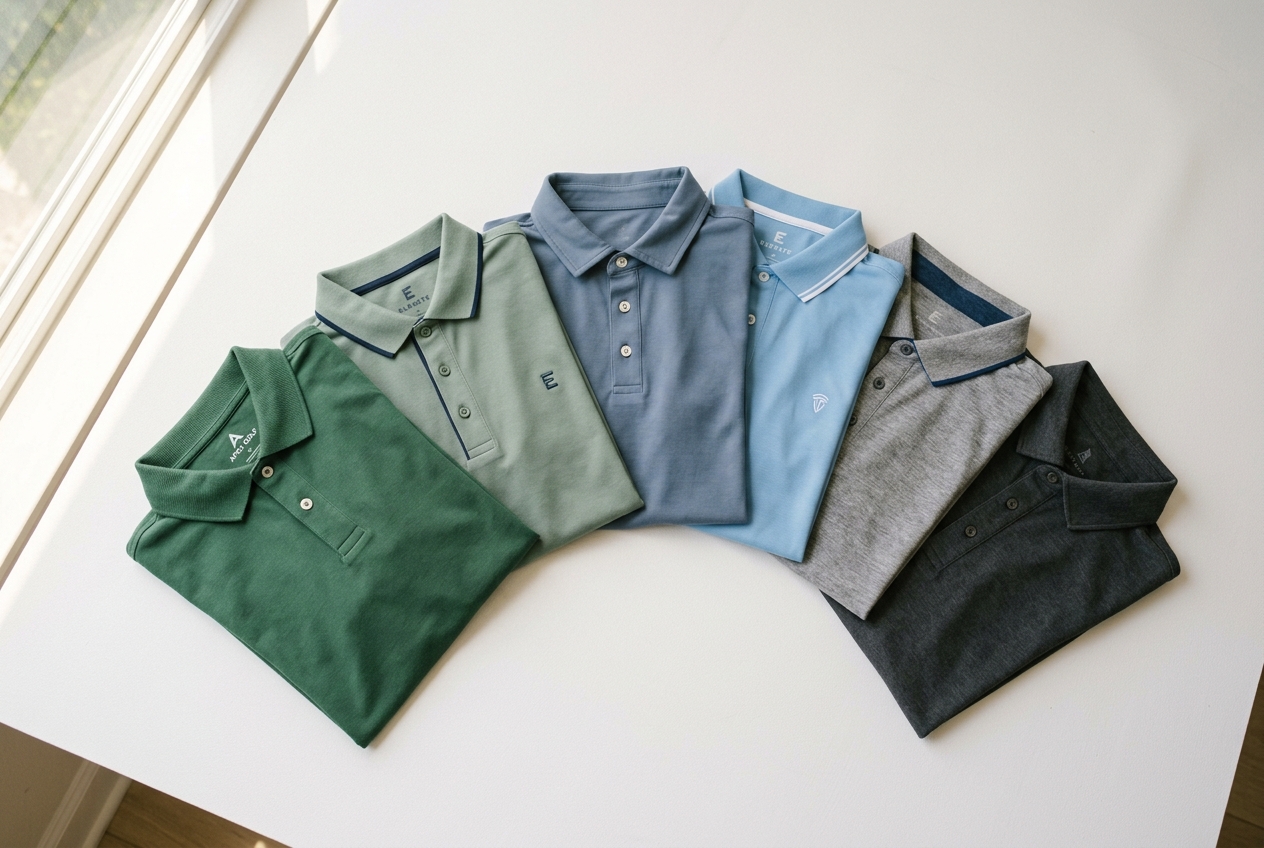
The gap between a $45 Nike golf polo and a $130 Peter Millar is real — but smaller than the price difference suggests. Both are moisture-wicking, both stretch, both hold their collar shape through a round, and both look appropriate at public and semi-private courses. What you sacrifice at the sub-$50 price point is specific, knowable, and often acceptable depending on how often you play and where. Here's the honest breakdown.
What You Get (and Sacrifice) at the Sub-$50 Price Point
What You Get
Genuine performance. The Nike Dri-FIT ADV polo at $45 uses real moisture-wicking technology — it moves sweat away from the skin, dries rapidly, and allows full range of motion through the swing. The fabric quality is a notch below what you'll find in a premium polo, but it performs. Puma MATTR and Adidas Ultimate365 in this price range are similarly functional. The technology is real; it's the finish, construction details, and longevity that differ.
A credible look. Budget golf polos in solid colors — white, navy, sage, heathered grey — are visually indistinguishable from their premium counterparts to most observers. The collar won't hold its shape as long, the fabric won't feel as premium in your hands, but on the course at a normal viewing distance, a $40 Nike polo in navy looks like a navy polo.
What You Sacrifice
Longevity. Premium polos are built with higher-thread-count fabrics, better collar construction, and stronger stitching that extends their useful life significantly. A $130 polo maintained properly will outlast three or four $45 polos. If you play 30+ rounds per year and wash your polo after each one, the economics of durability start to favor quality over volume.
Collar integrity over time. The collar is the first thing to degrade in budget polos — it curls, rolls, or loses its structure within a season of regular washing. This is the most visible sign that a polo is budget-tier, and it's largely unavoidable in the sub-$50 category. Managing this (cold wash only, hang dry, button top button during storage) extends the collar's life but doesn't eliminate the problem.
Private club appropriateness. Some private clubs have implicit brand expectations that go beyond written dress codes. A $40 Amazon Essentials polo in navy technically passes any written dress code — but it doesn't read the same as a Peter Millar polo at a conservative members club. For public and semi-private golf, this doesn't matter. For private club rounds, it does.
The Best Golf Polo Brands Under $50
Nike Dri-FIT ADV ($38–$50)
The most reliable sub-$50 golf polo in the market. Nike's Dri-FIT technology is genuine and performs across the full price range — the fabric moves moisture effectively, dries fast, and provides adequate stretch for golf. The ADV line specifically uses a fabric that's softer and more stretch-forward than their standard Dri-FIT line. Available in an excellent range of colorways including solid neutrals and subtle heathered options. Consistent sizing makes online purchasing low-risk.
Best for: public and semi-private course golf, casual rounds, golfers who play frequently and need multiple polos at reasonable cost.
Puma MATTR Cloudspun ($40–$48)
Puma's MATTR fabric is their performance fabric technology and it's legitimately good at this price point. The Cloudspun variant uses a softer, more comfortable surface feel than standard performance fabrics. The silhouette is slightly more casual than Nike's ADV — less structured, more relaxed — which suits public course golf perfectly. Strong color game for the price: Puma tends to offer more interesting colorways at budget tier than competitors.
Best for: golfers who prefer a more relaxed fit, casual and public course rounds, players who care about color options.
Adidas Ultimate365 ($40–$50)
Adidas's golf line is genuine and well-constructed even at the entry tier. The Ultimate365 polo has Primegreen sustainable fabric credentials (30% recycled materials) in addition to performance function — a distinction that matters to some golfers. The fit is slightly more structured than Puma, slightly more athletic than Nike. Collar quality is above average for the price tier, holding its shape reliably through a season with proper care.
Best for: golfers who want a slightly more structured look, players who want sustainable fabric credentials, semi-private course rounds.
Under Armour Tech Polo ($30–$45)
Under Armour's Tech polo is the strongest value play in the sub-$45 category. The loose-cut design is slightly less structured than competitors but the performance credentials are genuine — UA's heat-gear fabric manages moisture effectively and stretches adequately for the swing. Available in a wide range of sizes including extended. The lower price point allows golfers to buy multiple colorways without stress.
Best for: golfers who prioritize value above all, beginners who want functional golf clothing while learning the game, players who play in heat.
Amazon Essentials Golf Polo ($22–$35)
An honest assessment: Amazon Essentials golf polos are the most functional garments for their price in existence. For the golfer who plays occasionally and needs to pass a public course dress code without spending significantly, these are a legitimate option. The performance credentials are basic, the longevity is limited, and they won't pass muster at any club with standards. But for 10 rounds a year at public courses, they function.
Best for: occasional golfers, beginners, golfers building their game before investing in quality clothing.
Fabric Guide for Budget Golf Polos
All the brands above use polyester-based performance fabrics. Understanding the differences helps you assess quality beyond the brand name.
100% Polyester: Standard in entry-level polos. Performs adequately but can feel plasticky against skin in high heat. Dries fast, holds color well, easy care. The baseline.
Polyester-Spandex (95/5 or 92/8): The addition of spandex adds stretch and recovery, which matters for golf. A 95/5 blend provides minimal stretch; 90/10 or 88/12 provides meaningful stretch through the swing. Look for the spandex percentage in the product spec — it tells you how much the polo will accommodate the swing without distorting.
Recycled Polyester: Adidas and some other brands use recycled polyester in their performance fabrics. Performance is equivalent to virgin polyester — the distinction is environmental, not functional.
Avoid in golf polos: Cotton blends above 20% (heavy when wet, slow to dry), modal (too soft, loses structure), rayon (not durable). Budget golf polos with significant cotton content don't perform for active golf use regardless of price.
What to Look For When Buying Budget Golf Polos
The Collar Quality Test
In a store, examine the collar construction carefully. A well-made collar has a fused or structured inner layer that prevents rolling. Pinch the collar point between your fingers — if it collapses immediately, it will collapse on course. A quality collar has some resistance to compression. Budget polars with genuinely good collar construction (Adidas Ultimate365, Nike ADV) are worth noting; brands with soft collars will need replacement sooner.
The Stretch Test
Pull the fabric across the chest — a good performance fabric stretches meaningfully and snaps back immediately. A fabric that stretches slowly or doesn't fully recover has insufficient spandex content for active golf use. If you're buying online without being able to touch the fabric, check the spandex percentage in the product description as a proxy.
Seam Placement
Shoulder seams that sit exactly on the shoulder point are a sign of quality construction. Seams that fall down the upper arm indicate poor pattern grading. Check the sleeve seam placement in product photos — it's visible and tells you something real about the garment's construction quality.
How to Make Budget Golf Polos Look More Expensive
The gap between budget and premium polos is most visible in specific situations and minimized in others. These styling strategies close that gap without spending more.
Stay in Solid Neutrals
Solid colors — particularly navy, white, charcoal, and sage — are the equalizer between budget and premium. The fabric quality difference between a $45 Nike ADV and a $130 Peter Millar is visible when you're holding both; it's much less visible at normal social distance when both are solid navy. Patterned budget polos (stripes, prints) draw attention to fabric and construction quality in a way solid colors don't.
Buy in the Right Size
A well-fitting $45 polo looks more expensive than an ill-fitting $130 polo. Budget polo sizing can run inconsistently between brands — check size charts and, when in doubt, lean toward the smaller size if you're between. A polo that fits through the chest and shoulders looks intentional; one that's too large looks like an afterthought.
Tuck It In
A tucked polo in a solid color with clean golf shorts or trousers reads as appropriately dressed regardless of polo price. An untucked polo reveals the hem length inconsistencies and fabric softness that distinguish budget from premium more obviously. The tuck costs nothing and adds significantly to the finished look.
Coordinate with Quality Bottoms
Investing more in golf shorts or trousers than in the polo inverts the usual logic but works surprisingly well. A $45 budget polo over a $90 pair of well-fitting Adidas golf trousers looks more coordinated and intentional than the reverse. The bottom half of your outfit anchors the overall impression; a quality foundation elevates everything above it.
Care Properly
Cold wash, gentle cycle, hang dry — every time. The primary reason budget polos look budget quickly is improper care: hot washing degrades the fabric, tumble drying shrinks and pills, ironing on high heat causes sheen. A $45 Nike polo washed correctly for a season looks considerably better than the same polo washed carelessly for a month. See our complete golf clothing care guide for details.
Frequently Asked Questions
Will a $45 polo pass a private club dress code?
Almost certainly yes — private club dress codes specify garment type (collared polo), not brand or price. A $45 Nike ADV in solid navy passes any written dress code that a $130 Peter Millar passes. The practical distinction is the unwritten expectation at the most conservative private clubs — where other members will notice brand and fabric quality. For guest rounds and most private club situations, a quality budget polo in solid colors is completely appropriate.
How many rounds can I expect from a $45 golf polo?
With proper care (cold wash, hang dry), a quality budget polo from Nike, Puma, or Adidas should last 30–50 rounds before showing significant wear — typically collar degradation or slight pilling. That's one to two seasons for a golfer who plays 25–30 rounds per year. A premium polo with identical care might last 100+ rounds. The economics are close to equivalent at the per-round cost level; the difference is the experience of wearing a newer-feeling polo versus a worn-in one.
Are TravisMathew or Vuori worth the price over budget brands?
For most golfers who play regularly, yes. The TravisMathew polo at $75–$90 sits between budget and premium and offers meaningfully better collar longevity, fabric hand-feel, and silhouette than the sub-$50 tier. Vuori is stronger in the athleisure category than traditional polo format. If you play 20+ rounds per year, the mid-tier investment typically pays off over two to three seasons compared to buying multiple budget replacements.
GolfClothing.com is reader-supported. When you buy through links on our site, we may earn an affiliate commission at no extra cost to you. Learn more →
Budget Golf Polo Guide — Best Value Picks
A curated list of the best golf polos under $50, updated seasonally with current stock availability.
Free. No spam. Unsubscribe anytime.