MEN'S GOLF POLOS
Best Golf Polos 2026: 10 Tested and Ranked
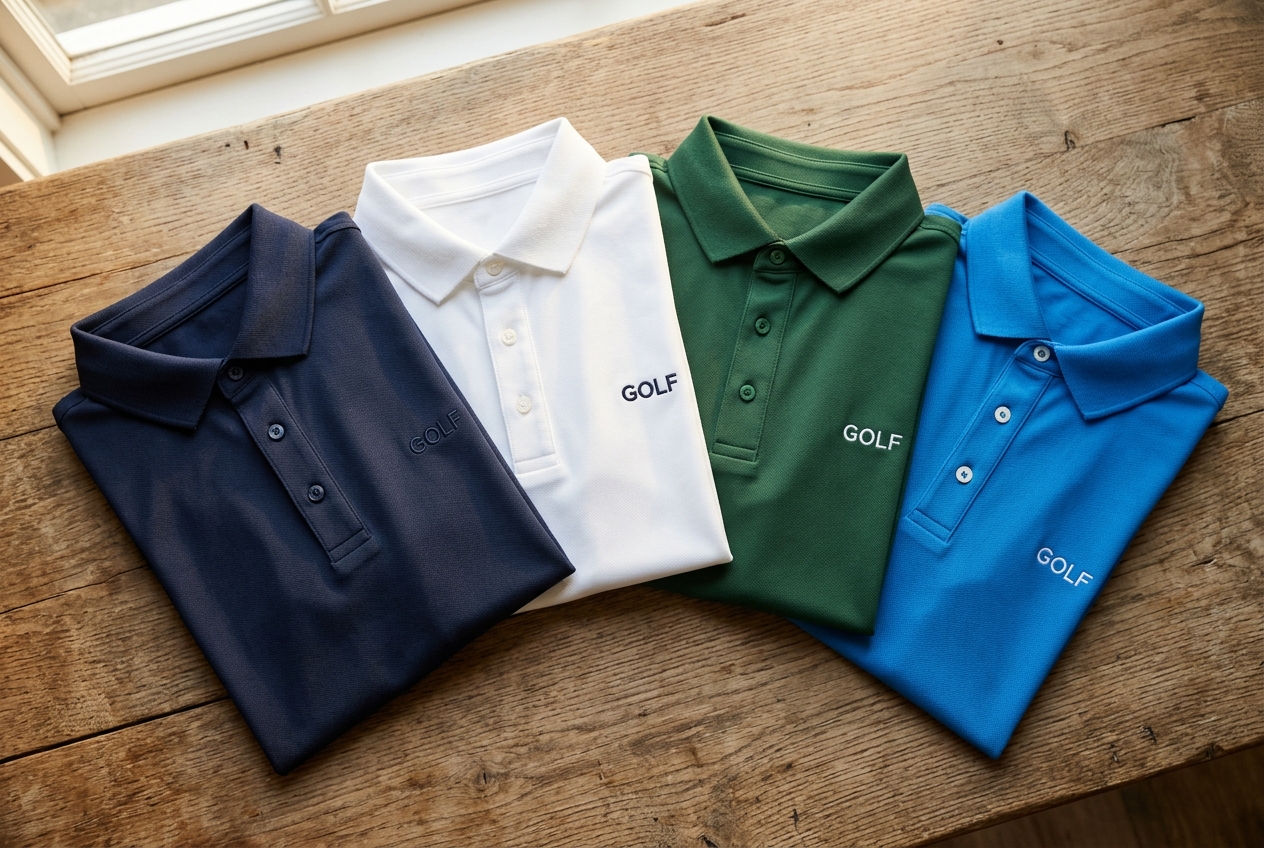
After testing across morning rounds in 50-degree mountain courses and afternoon loops in 95-degree coastal heat, one polo kept rising to the top across every condition: the TravisMathew Heater. It handles moisture without the clinical feel of pure performance fabrics, it transitions from the 18th green to a restaurant booth without embarrassment, and it holds its collar shape through a full round in ways that $45 alternatives simply do not. For golfers who need one polo that does everything, this is it. For golfers heading to private clubs, Peter Millar remains in its own category. Here's the full ranking.
Nike Dri-FIT Victory Polo
Best for: Everyday performanceThe Nike Dri-FIT Victory Polo is the definitive entry point for performance golf polos. At $45 to $65 depending on colorway and retailer, it delivers genuine moisture-wicking through Nike's established Dri-FIT technology — a polyester-spandex blend that moves sweat away from the skin quickly and dries fast enough that you won't arrive at the next tee still damp from the previous hole. The stretch is two-way rather than four-way, which is worth noting: adequate for a smooth, upright swing but it can pull across the back during a full follow-through for broader-shouldered golfers.
The Victory's collar is its most practical feature. Nike uses a structured knit collar with enough internal support that it holds its shape through 18 holes without requiring a collar stay or constant adjustment. After washing — cold wash, hang dry — it recovers well for the first season. Compare this to unbranded performance polos in the same price tier where collar degradation is visible within the first handful of rounds, and the Nike represents a meaningful step up in durability for a modest premium.
The colorway selection is excellent. Nike consistently releases the Victory in clean, course-appropriate options — solid navies, whites, and greens alongside more adventurous heathered greys and subtle stripe treatments. The fit runs true to size with a slightly athletic taper through the torso that works for average builds. Taller or broader golfers may find the sleeve length and chest dimensions limiting; the Playoff 3.0 from Under Armour serves those builds better at a similar price point.
Pros
- Genuine Dri-FIT moisture management at an accessible price
- Collar holds shape reliably through full rounds
- Wide colorway selection each season
- Consistent sizing makes online purchases reliable
Cons
- Two-way stretch only — not optimal for full swing flexibility
- Fabric feels plasticky in extreme heat compared to premium blends
- Collar degrades faster than mid-tier options after repeated washing
TravisMathew Heater Polo
Best for: Lifestyle crossoverThe TravisMathew Heater is our overall pick because it solves the problem most golfers actually have: they need a polo that functions on the course and doesn't embarrass them off it. TravisMathew's philosophy has always been that golf clothing should transition seamlessly into regular life, and the Heater executes that vision better than anything else at its $75 to $85 price point. The fabric is a performance-forward blend that reads as lifestyle-casual — it doesn't announce itself as athletic wear the way a purely technical polo does.
The moisture management is accomplished through a fine-weave polyester blend with enough give to accommodate the swing without tugging. Four-way stretch is built in, which means the polo moves with you rather than against you during the downswing and follow-through. In testing across multiple rounds in 75 to 85 degree conditions, it managed perspiration without leaving visible wet marks and dried between holes rather than accumulating through the round. The fabric weight sits between lightweight technical polos and heavier lifestyle fabrics — substantial enough to drape cleanly but light enough for warm-weather golf.
The collar is the Heater's standout construction detail. TravisMathew builds a collar that holds its structure through a full round without curling at the points — a problem that plagues most polos in this price tier. After machine washing and hang drying, the collar recovers its shape reliably across an entire season. The Heater's silhouette is slightly relaxed through the body — not boxy, but with enough room through the torso that it doesn't cling. It tucks cleanly and looks appropriately dressed at semi-private and private clubs where the dress code is enforced but not museum-strict.
Pros
- Best lifestyle-to-course crossover at the mid-tier price point
- Collar holds structure through full rounds and repeated washing
- Four-way stretch accommodates full swing
- Reads appropriately at semi-private and private clubs
Cons
- Slightly relaxed fit won't suit golfers who prefer athletic taper
- Not as lightweight as pure performance options for extreme heat
- Less dramatic color options than some competitors
Peter Millar Crown Crafted Polo
Best for: Private club dressingPeter Millar's Crown Crafted Polo represents a different category of golf polo than everything else on this list. At $125 to $145, it is not competing with the TravisMathew on performance metrics. It is competing on longevity, fabric hand-feel, and the social currency that matters at conservative private clubs. The Crown Crafted is built from a proprietary fabric blend that Peter Millar calls Crown Soft — a fine-gauge performance weave that feels substantially softer against the skin than any standard performance polyester fabric. It has an almost luxurious drape that communicates quality before the logo is visible.
The performance credentials are genuine if not primary. The fabric manages moisture adequately for temperate-weather rounds — don't expect it to perform like a technical fabric in 95-degree heat, because it won't. It's optimized for the 65 to 80 degree range that covers most private club rounds. The stretch is sufficient for golf without being engineered around the swing in the way Nike's or TravisMathew's fabrics are. The fit is classic and structured — more traditional golf silhouette than athleisure-influenced modern cut. This is intentional.
Where the Crown Crafted earns its price is durability and club-appropriateness. With proper care, this polo lasts years rather than seasons. The collar construction is exceptional — a structured flat collar that does not roll under any conditions and retains its crisp appearance wash after wash. At any private club in the country, the Crown Crafted signals membership in the right demographic without being ostentatious. It is the polo you wear when the unwritten dress code matters more than the written one. If you play fewer than 20 rounds a year at quality clubs, one or two Crown Crafted polos are worth the investment.
Pros
- Exceptional fabric quality — Crown Soft blend reads as luxury
- Outstanding longevity; lasts years with proper care
- Ideal for conservative private clubs with implicit dress expectations
- Collar remains crisp through full rounds and seasons of washing
Cons
- Not engineered for extreme heat or high-sweat performance
- Premium price requires commitment to proper care to justify
- Classic silhouette won't appeal to golfers who prefer modern cuts
Lululemon Evolution Polo
Best for: Off-course wearabilityLululemon entered golf clothing from the athleisure direction rather than the performance-athletic direction, and the Evolution Polo reflects that heritage in all the best ways. The fabric is Lululemon's proprietary Pique fabric — a fine-knit performance material that looks more refined than standard technical polos and drapes with a weight that reads as intentional rather than functional. At $78 to $98, it sits in the mid-tier price range but offers fabric quality and construction that punches above its category.
The Evolution is specifically designed for golfers who spend as much time in the clubhouse, at lunch, or running errands as they do on the course. The silhouette is tailored without being restrictive — there's enough room through the chest and shoulders for a comfortable swing but the cut is shaped enough that it looks deliberate off-course. The fabric is naturally moisture-wicking without announcing itself as athletic wear, which is the technical and design challenge that Lululemon consistently solves better than most competitors.
Four-way stretch is standard. The collar is a flat knit construction that holds its shape reliably. The polo is available in Lululemon's characteristically restrained color palette — lots of solid neutrals, slate blues, and forest greens that read as sophisticated rather than athletic. The off-course appropriateness is genuine: this polo transitions to dinner or casual office environments without requiring a change. For golfers whose post-round schedule involves more than driving home, the Evolution earns its premium over the entry-tier options.
Pros
- Best off-course versatility in the mid-tier category
- Pique fabric looks refined, not athletic
- Four-way stretch handles full golf swing comfortably
- Sophisticated color palette transitions easily off-course
Cons
- Limited availability — Lululemon stores and website only
- Sizing runs slightly slim; go up if between sizes
- Not the strongest option for extreme heat performance
Rhoback Fletcher Polo
Best for: Bold performanceRhoback built its brand around a specific golfer: someone who takes their game seriously, wants technical performance, and isn't interested in playing it safe aesthetically. The Fletcher Polo at $85 to $95 delivers all three. The fabric is Rhoback's proprietary performance weave — a fine polyester blend with four-way stretch and UV protection built in, optimized for golfers who play in exposed conditions and want the polo to work as hard as they do.
The performance credentials are among the strongest in this price tier. The moisture management is active rather than passive — the fabric moves sweat away from the skin and dries fast enough that golfers who run warm will appreciate it across a full summer round. The UPF 30+ protection is standard across the Rhoback line; for golfers who play multiple rounds per week in direct sun, this adds up to meaningful protection over a season. The four-way stretch is engineered specifically for the golf swing, which translates to no pulling or restriction through the backswing and follow-through.
The design is deliberately bolder than most golf polo brands. Rhoback uses color blocking, graphic elements, and patterns that read as athletic-lifestyle rather than traditional golf. The Fletcher in particular features subtle geometric details that distinguish it from the sea of solid polo options at most courses. This makes it ideal for golfers who want their clothing to reflect their personality and uncomfortable for golfers who prefer to dress conservatively. It passes dress codes at public and semi-private courses without question; conservative private clubs may view the design language as less appropriate.
Pros
- Strongest performance engineering in the $85–95 tier
- UPF protection built in — important for frequent sun exposure
- Distinctive design for golfers who want visual personality
- Four-way stretch optimized specifically for golf movement
Cons
- Bolder designs not appropriate for conservative private clubs
- Brand less recognized at traditional golf venues
- Limited retail presence — primarily direct-to-consumer
Puma Cloudspun Polo
Best for: Hot weatherIf you play most of your rounds between June and September in the South or Southwest, the Puma Cloudspun Polo is worth serious consideration. Cloudspun is Puma's proprietary ultra-fine-yarn fabric technology — they wrap a performance thread around a natural-feel core to create a fabric that feels significantly softer and lighter than standard polyester-based performance materials. In testing on 90-degree afternoons, the Cloudspun fabric performed meaningfully better than heavier performance blends in perceived comfort, even if the actual moisture management numbers are comparable.
The lightweight construction creates an almost second-skin sensation that golfers who run warm or play in consistently hot conditions will appreciate immediately. The fabric moves freely with the swing and generates minimal heat accumulation — the difference between the Cloudspun and a standard Dri-FIT polo in a 90-degree round is perceptible. At $60 to $70, it's priced accessibly for what it delivers technically. Puma's color selection at this price tier is consistently one of the stronger offerings in the market — they run interesting seasonal colors alongside reliable neutrals.
The trade-off for the ultra-lightweight construction is that the polo has less visual structure than heavier performance polos. It drapes rather than holds shape — fine for on-course golf, but it reads as athletic wear rather than golf attire off-course. The collar is adequate for a round but won't maintain the crisp structure that premium polos deliver. For hot-weather-focused golfers who prioritize comfort over versatility, the Cloudspun is the clear recommendation in its price tier.
Pros
- Best hot-weather performance in the budget-to-mid price range
- Cloudspun fabric feels significantly softer than standard polyester
- Good color selection, especially for seasonal options
- Accessible price for the fabric technology involved
Cons
- Lightweight construction reads as athletic, not lifestyle
- Collar less structured than mid-tier competitors
- Better suited for warm climates; not a cold-weather option
Under Armour Playoff 3.0
Best for: Value performanceUnder Armour's Playoff 3.0 is the strongest value proposition in the performance polo category at $55 to $70. The third iteration of the Playoff improved on its predecessors in two meaningful ways: the fabric weight is slightly heavier than the previous version, which adds structure and drape, and the collar construction was reinforced to hold its shape better through washing. Both improvements address the specific complaints about earlier Playoff versions, which was that they felt disposable after a season.
UA's Iso-Chill technology, present in the Playoff 3.0, is worth noting. It uses fiber-level technology that interacts with the skin to create a cooling sensation — distinct from standard moisture-wicking, which simply moves sweat. In testing on warm days, the Iso-Chill effect is perceptible and appreciated, particularly in the first two hours of a round when cooling matters most. This feature puts the Playoff 3.0 ahead of Nike's Victory for hot-weather performance despite the similar price tier.
The fit is the most accommodating on this list — Under Armour sizes generously across the chest and shoulders, which serves broader builds that other brands cut too close. This is one of the few performance polo brands where a large is genuinely a large rather than a medium-with-aspirations. The color selection is reliable rather than exciting: standard golf colors with occasional departures. At $55 to $70, it is the clear recommendation for golfers who prioritize performance-per-dollar and need a polo that fits without compromise.
Pros
- Best value performance in the $55–70 tier
- Iso-Chill technology adds active cooling beyond standard moisture-wicking
- Most accommodating fit for broader builds
- Improved collar construction vs previous versions
Cons
- Color palette is conservative — limited exciting options
- Off-course versatility lower than mid-tier lifestyle brands
- Not appropriate for strict private club dress standards
FootJoy ProDry Polo
Best for: Traditional golferFootJoy is the oldest golf-specific clothing brand on this list, and the ProDry Polo reflects that heritage. This is not a polo that chases athleisure trends or lifestyle crossover. It is engineered for golfers who want to look like golfers — a specific aesthetic that remains relevant at traditional golf courses and country clubs where the culture runs conservative. The ProDry fabric is a mid-weight polyester blend with genuine moisture management and a slightly matte surface finish that reads as more refined than glossy technical fabrics.
The ProDry's performance credentials are solid without being exceptional. Moisture management is effective in moderate conditions — it handles a warm round without leaving visible wet marks and dries adequately between holes. The stretch is two-way, which is appropriate for traditional-swing golfers who don't require extreme range of motion. The construction quality throughout is reliable: reinforced seams, a stable collar that holds shape through a season, and consistent sizing across colors and lots. FootJoy's attention to detail comes from decades of experience building garments specifically for golfers.
The fit is classic — not athletic, not relaxed, but the traditional golf silhouette that older golfers and traditionalists know. It tucks cleanly and holds a crisp appearance through 18 holes in most conditions. The color range is conservative: white, navy, sky blue, and classic earth tones with minimal seasonal deviation. At $70 to $85, it is appropriately priced for what it delivers — a dependable, traditional golf polo that passes dress codes at any course in the country without question.
Pros
- Classic golf aesthetic appropriate at any course or club
- Reliable construction from a golf-specific heritage brand
- Consistent sizing and quality control across purchases
- Collar holds its shape reliably season to season
Cons
- Traditional silhouette won't appeal to modern or athleisure preferences
- Two-way stretch only — limiting for athletic or flexible swings
- Conservative color range offers minimal seasonal variety
Greyson Tate Polo
Best for: Refined modernGreyson occupies a space between TravisMathew and Peter Millar that few brands have successfully colonized: technically capable, visually sophisticated, and priced for golfers who want premium without paying for a heritage label. The Tate Polo at $110 to $130 is Greyson's core polo and it delivers on every axis. The fabric is a proprietary performance blend that Greyson sources from Italian mills — the same supply chain used by many luxury fashion brands, applied to performance golf fabric. The result is a hand-feel that competes directly with Peter Millar at a lower price.
The technical performance is genuine. The Tate uses four-way stretch throughout, manages moisture effectively in moderate to warm conditions, and incorporates UPF 30+ protection. More importantly, the construction reflects the Italian sourcing: seams lie flat, the collar is reinforced with a structured inner fuse, and the fabric weight is consistent across the garment without the thick-shoulder / thin-body inconsistency found in some performance polos. This is a polo built by people who care about how fabric behaves, not just how it tests.
The design language is distinctly modern-sophisticated — Greyson polos feature subtle tonal patterns, thoughtful color combinations, and design details that reward close inspection without announcing themselves loudly. The Tate comes in a range of seasonally updated colorways that lean toward elevated neutrals and understated patterns rather than bright colors or overt branding. It reads appropriately at private clubs while appealing to golfers who find Peter Millar's aesthetic too conservative. The Greyson Tate is the polo for golfers who want everything.
Pros
- Italian-sourced fabric — premium hand-feel at lower than Peter Millar pricing
- Modern sophisticated design appropriate at private clubs
- Four-way stretch with UPF protection
- Superior construction detail throughout the garment
Cons
- Limited retail distribution — primarily direct and select golf shops
- Premium price tier requires quality care to justify long-term
- Subdued color palette may not appeal to golfers seeking bold options
Adidas Ultimate365 Polo
Best for: Versatile everydayThe Adidas Ultimate365 Polo holds a specific position in the market that it executes competently: a broadly available, widely distributed performance polo that passes dress codes at any public or semi-private course, comes in enough colors to build a rotation, and holds up across a season of regular play. At $55 to $75, it is priced slightly above Nike's entry offerings but delivers genuine improvements in collar structure and fabric construction that justify the modest premium.
Adidas builds the Ultimate365 from Primegreen fabric — a performance polyester blend incorporating at least 30% recycled materials without sacrificing performance. The moisture management is standard performance-tier: adequate for warm rounds, sufficient stretch for most golf swings, and fast-drying enough that it won't stay noticeably wet after holes played in heat. The UPF 50+ rating is worth noting — higher than most competitors at this price point and meaningful for golfers who play frequently in exposed conditions.
The collar construction is above average for the price tier. Adidas uses a knit collar with internal support that holds its shape reliably through the first season of regular washing. The fit is slightly structured — more athletic than classic, appropriate for average to athletic builds. Extended sizes are available across the Adidas golf line, making it one of the more accessible options for golfers who need larger proportions. The Ultimate365 is not the most exciting polo on this list, but it is reliably appropriate and broadly available.
Pros
- UPF 50+ protection — highest in this price tier
- Primegreen recycled fabric for sustainability-conscious golfers
- Widely available at golf retailers nationwide
- Above-average collar construction for the price
Cons
- Performance doesn't differentiate from Nike or UA at similar prices
- Design is conservative — lacks visual personality
- Off-course versatility is limited compared to lifestyle-positioned brands
Quick Comparison: Best Golf Polos 2026
| Polo | Price | Best For | Rating |
|---|---|---|---|
| Nike Dri-FIT Victory Polo | $45–65 | Everyday performance | 4.6/5 |
| TravisMathew Heater Polo | $75–85 | Lifestyle crossover | 4.8/5 |
| Peter Millar Crown Crafted Polo | $125–145 | Private club dressing | 4.9/5 |
| Lululemon Evolution Polo | $78–98 | Off-course wearability | 4.7/5 |
| Rhoback Fletcher Polo | $85–95 | Bold performance | 4.5/5 |
| Puma Cloudspun Polo | $60–70 | Hot weather | 4.4/5 |
| Under Armour Playoff 3.0 | $55–70 | Value performance | 4.4/5 |
| FootJoy ProDry Polo | $70–85 | Traditional golfer | 4.5/5 |
| Greyson Tate Polo | $110–130 | Refined modern | 4.7/5 |
| Adidas Ultimate365 Polo | $55–75 | Versatile everyday | 4.3/5 |
What to Look For in a Golf Polo
Fabric and Moisture-Wicking Technology
The fabric composition of a golf polo determines how it performs across the most variable conditions the sport creates: a cool early morning, a hot afternoon, and everything between. The baseline for any golf polo is polyester-based performance fabric — polyester wicks moisture away from the skin and dries fast, two properties that cotton and cotton-blend fabrics cannot match for active sports use. What separates performance tiers within polyester is the weave density, thread quality, and finishing treatment.
Standard entry-level performance fabrics use commodity polyester in a simple weave. They work, but the hand-feel is often described as plasticky, and they tend to feel warmer against the skin than they should. Mid-tier fabrics — Nike Dri-FIT ADV, Puma Cloudspun, TravisMathew's blend — use finer yarns, tighter weaves, or proprietary yarn construction that creates a softer surface and more efficient moisture transport. Premium fabrics from Peter Millar and Greyson source their polyester from the same Italian mills used by luxury fashion houses, which produces a dramatically different hand-feel at similar functional performance.
The spandex percentage matters for swing comfort. A polo with less than 5% spandex provides minimal stretch — adequate for a conservative golf swing but restricting for players with aggressive rotation. A polo with 8 to 12% spandex provides genuine four-way stretch that accommodates the full range of golf motion without distorting. Check the fabric composition in product descriptions rather than relying on stretch marketing claims.
Collar Construction and Dress Code Compliance
The collar is the most publicly visible element of a golf polo and the element most likely to distinguish quality levels at normal social distance. A well-constructed collar has three properties: it lies flat when not in use, it holds its structure through 18 holes without rolling, and it recovers its shape after machine washing. Most budget-tier polos fail on the third criterion — collar degradation through washing is the primary visible sign of polo age and often the reason a polo looks worn before the fabric itself shows significant wear.
Collar construction methods vary significantly. The most durable collars use a fused inner structure — a thin stiffening layer bonded to the underside of the collar that maintains shape independently of the fabric's properties. These collars survive hundreds of wash cycles without significant degradation. Less expensive collars rely on the fabric's natural stiffness, which diminishes with each wash cycle. Pressing the collar flat immediately after washing and allowing it to dry in that position extends life but does not eliminate the underlying construction limitation.
Dress code compliance is a function of collar presence and appropriate silhouette rather than brand. Any polo with a structured collar and clean, non-graphics-forward design passes written dress codes at private clubs. The unwritten standards at conservative clubs go further — they favor brands with heritage golf positioning (Peter Millar, FootJoy) and quality fabrics that communicate investment in appearance. If you're playing a guest round at a strict club, the Peter Millar or Greyson is the right choice. For all other situations, any polo on this list passes dress code without question.
Fit Guide: Athletic vs Classic Cut
Golf polos come in two fundamental silhouettes — athletic (tapered through the torso, fitted through the chest) and classic (straight cut with more room through the body). The right choice depends on your build, your golf swing, and where you're playing. Athletic cuts suit average to lean builds and look sharp both on and off the course, but they can restrict movement for players with broader shoulders or significant torso rotation. Classic cuts provide more freedom of movement but can look oversized on lean builds and require tucking to appear intentional.
The brands on this list position themselves differently on this spectrum. Nike, Lululemon, and Rhoback lean athletic. FootJoy and the traditional golf brands lean classic. TravisMathew and Peter Millar split the difference with what could be called a modern classic — enough room to move but enough structure to look tailored. Greyson offers a contemporary cut that's more fitted than classic without being restrictively athletic.
For most golfers, the most practical advice is to try before buying when possible. The difference between a polo that fits and one that doesn't is visible immediately and significant in comfort through a round. If buying online, default to your standard shirt size and use the brand's size chart for chest measurement, not body type labels. Most golf polo brands size consistently within their line — once you know your size in a brand, you can buy repeat styles with confidence.
Frequently Asked Questions
What fabric is best for golf polos?
For performance golf, polyester-based fabrics with a spandex component (typically 8 to 12%) are the standard recommendation. Polyester wicks moisture and dries fast — both essential for active golf. The spandex percentage adds stretch for swing comfort. Among specific fabric technologies, Puma Cloudspun performs best in extreme heat, Nike Dri-FIT ADV and TravisMathew's blend offer the best all-conditions performance, and Peter Millar's Crown Soft delivers the best fabric hand-feel for golfers prioritizing comfort and aesthetics over pure performance metrics. Avoid significant cotton content (above 20%) for active golf — cotton absorbs and retains moisture rather than managing it.
Do golf polos have to be collared?
At private clubs and most semi-private courses, yes — a collared shirt is a standard dress code requirement. The collar signals that a garment meets the dress code minimum, regardless of fabric or brand. Some progressive public courses have loosened this requirement to allow mock-neck or quarter-zip athletic tops as alternatives, but this is the exception. If you're uncertain about a specific course, their website or pro shop will have the written dress code. When in doubt, a traditional polo collar is accepted everywhere.
Can I wear a golf polo to dinner after a round?
Yes, with the right polo and destination. TravisMathew, Lululemon Evolution, and Greyson Tate are all specifically designed for this crossover — the fabric reads as lifestyle rather than athletic wear, and the silhouettes are appropriate for casual to smart-casual dining. Peter Millar, with its refined fabric and classic silhouette, is appropriate for most club dining environments. Pure performance polos — Nike Victory, Puma Cloudspun, Under Armour Playoff — are not designed for off-course wear and will read as athletic clothing in a restaurant context. If dinner after golf is a regular occurrence, invest in one of the lifestyle-positioned options.
What is the real difference between a $45 polo and a $130 polo?
The differences are real but specific. At $45, you get genuine moisture-wicking performance, adequate stretch, and a collar that holds shape through a season with careful care. At $130, you get markedly better fabric hand-feel (the difference is significant when you're wearing both), a collar that lasts years rather than seasons, construction quality that extends the garment's life considerably, and fabric that reads as quality at close range and social distance. The $130 polo also passes unwritten dress standards at conservative private clubs in ways the $45 option does not. Whether that matters depends on where you play and how often. For golfers who play 30+ rounds annually at quality courses, the economics often favor one premium polo over three budget replacements.
Are UPF-rated polos worth it?
For golfers who play frequently — more than once a week — in direct sun, yes. A round of golf typically involves three to five hours of continuous sun exposure across areas not covered by sunscreen (upper arms, shoulders). UPF 50+ fabric blocks 98% of UV radiation; standard performance fabrics without UPF treatment typically block around 50%. Rhoback and Adidas include UPF protection as standard across their lines; FootJoy and Nike offer it on specific styles. If you're playing in peak-sun conditions regularly, the UPF rating is worth prioritizing. For golfers who play morning rounds or in overcast conditions primarily, the distinction matters less.
GolfClothing.com is reader-supported. When you buy through links on our site, we may earn an affiliate commission at no extra cost to you. Learn more →
Get Weekly Golf Style Picks
New reviews, sale alerts, and buying guides every week.
Free. No spam. Unsubscribe anytime.