MEN'S GOLF ACCESSORIES
Best Golf Hats 2026: Caps, Bucket Hats, and Visors Tested
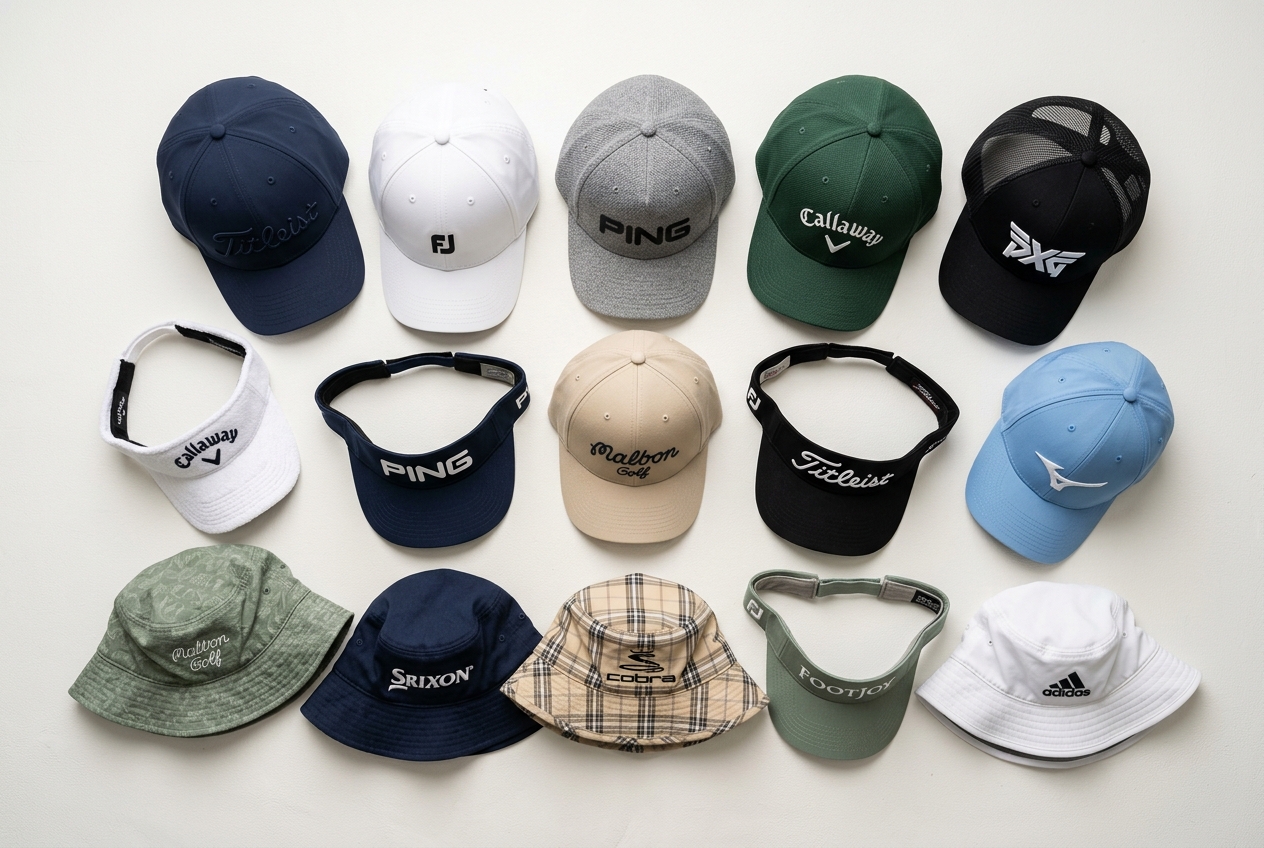
The golf hat debate has been settled by dermatologists, if not by fashion editors: wear a hat, make it UPF-rated if possible, and choose one that you'll actually keep on your head for four hours in summer heat. The practical questions are which type — structured cap, unstructured cap, bucket hat, or visor — and which specific model delivers on fit, moisture management, and style within your context. This guide covers nine of the best options in 2026 across all three categories, with particular attention to UV protection ratings, what private clubs actually allow, and the bucket hat trend that's genuinely divided golf culture.
Quick Top Picks
For traditional golfers at conventional clubs, the Titleist Tour Performance Cap is the default correct answer — it's the standard by which other structured golf caps are measured, and its recognition value at private clubs is unmatched. For golfers who want modern versatility and a cap that works from the course to the restaurant, the TravisMathew Bahamas Cap is the strongest lifestyle crossover option. For premium construction quality and private club styling, the Peter Millar Crown Sport Cap justifies its price premium. And for sun protection that genuinely matters in summer heat, the Malbon Golf Bucket Hat provides UPF coverage that no structured cap can match.
1. Titleist Tour Performance Cap
Best Classic Tour LookStrengths
- Tour-standard construction recognized at every golf venue
- Moisture-wicking sweatband manages heat effectively
- Structured crown maintains shape round after round
- Wide colorway selection including classic and seasonal options
Weaknesses
- Traditional styling doesn't cross over to off-course contexts
- UPF rating is basic — full face and neck exposure remains
- Runs slightly large — size down if between sizes
Titleist's Tour Performance Cap holds a specific market position that no other brand has successfully challenged: it's the cap that every caddie on every major tour loop wears, which gives it a recognition value and contextual correctness at golf venues that money can't buy through marketing alone. When you're wearing a Titleist Tour Performance Cap at a private club, nobody questions your legitimacy as a golfer. The styling cue is clear and universally understood.
The construction delivers what the tour-use positioning requires. The moisture-wicking sweatband uses Titleist's Cool & Dry technology — a moisture-management textile that draws perspiration away from the forehead during summer rounds. The structured crown uses a medium-stiff profile that maintains its shape through sweat, rain exposure, and repeated washings without the crumpling that plagues cheaper structured caps. The visor is pre-curved in a mid-curve profile that flatters most face shapes without the aggressive downward bend that makes some caps look artificially baseball-coded.
The Titleist Tour Performance's limitation is precisely its traditionalism. It reads as a golf hat in every context — on the course, it's perfect; at a restaurant after the round, it marks you as someone who forgot to change hats. For golfers who want style flexibility beyond the course, look at the TravisMathew Bahamas or Melin Hydro. For golfers who primarily care about playing correctly and looking right at the club, nothing on this list is a better value at $30–$40.
Check Price at Titleist.comPrice range: $30–$40 · Available at Titleist.com and golf retailers
2. TravisMathew Bahamas Cap
Best Lifestyle CrossoverStrengths
- Unstructured crown packs flat in a bag without losing shape
- Moisture-wicking performance fabric throughout
- Reads as lifestyle headwear, not golf-specific
- TravisMathew's color palette is distinctive and modern
Weaknesses
- Unstructured profile isn't for golfers who prefer a rigid crown
- Logo placement is prominent — not ideal for minimalist aesthetic preferences
- Less formal than Titleist or Peter Millar for traditional venue context
TravisMathew's Bahamas Cap is the brand's clearest statement in headwear: a cap built on golf performance requirements but styled to function as lifestyle headwear from the first tee through the day's other activities. The unstructured crown is the defining construction choice — it sits softly on the head rather than holding a rigid profile, which produces a relaxed, worn-in appearance that reads more as fashion headwear than athletic gear. For golfers who want to wear their hat to dinner after the round without signaling "I just came from the golf course," the Bahamas is the answer in this list.
The functional performance is solid for the price. TravisMathew uses a moisture-wicking performance fabric throughout the crown and sweatband that manages summer heat adequately. The adjustable closure (leather strap with metal buckle on most colorways) provides a clean finish that elevates the cap above Velcro or snapback closures that read as sportswear rather than lifestyle accessories. The visor pre-curve is minimal — the Bahamas sits straighter than most golf caps, which contributes to its off-course versatility but may read as less traditionally correct at very conservative venues.
For golfers who play primarily semi-private and resort courses, want one hat that serves on and off the course, and don't want to manage a separate "going out" hat — the TravisMathew Bahamas at $35–$45 is one of the best values on this list.
Check Price at TravisMathew.comPrice range: $35–$45 · Available at TravisMathew.com and golf retailers
3. Peter Millar Crown Sport Cap
Best Premium Club StyleStrengths
- Premium construction quality that reads correctly at private clubs
- Crown Sport fabric manages heat with a refined aesthetic finish
- Peter Millar branding carries venue-credibility at elite courses
- Subtle palette — no aggressive colorways or branding
Weaknesses
- $55–$70 is real money for a hat that primarily signals affiliation
- Traditional styling doesn't translate off-course
- Limited colorway selection compared to Nike or TravisMathew
The Peter Millar Crown Sport Cap occupies the premium tier in golf headwear — a position that's justified not by dramatic technical superiority but by construction refinement and the social signaling that comes with the Peter Millar brand at private clubs and member-guest events. If you wear Peter Millar everywhere else and your hat looks like a $25 cap from the pro shop, the ensemble reads as inconsistent. The Crown Sport Cap at $55–$70 is the correct finishing piece for a Peter Millar outfit.
The Crown Sport fabric is Peter Millar's performance textile applied to headwear construction — a woven stretch material with subtle texture that reads as refined rather than athletic. The construction quality is evident in the details: the interior sweatband is finished cleanly, the stitching on the visor is even, and the structured crown holds its shape with a medium-firm profile that photographs correctly from every angle. The Peter Millar crest embroidery on the front panel is understated relative to logo-heavy alternatives — large enough to be recognized by people who know the brand, small enough to read as refined rather than branded.
The value case for the Crown Sport Cap depends on your context. If you play at private clubs where headwear brand recognition matters, the $55–$70 premium over a Titleist or Nike cap is a straightforward investment in looking correct. If you play primarily at public courses where no one notices the logo, the $30 Titleist Tour Performance delivers 90% of the same performance at half the price.
Check Price at PeterMillar.comPrice range: $55–$70 · Available at PeterMillar.com and premium golf retailers
4. Melin Hydro Headsetter
Best Premium ConstructionStrengths
- Hydro fabric is genuinely waterproof — handles rain without waterlogging
- WNDR foam sweatband absorbs moisture without retaining odor
- Flat brim option with modern streetwear aesthetic
- The most technically sophisticated hat construction on this list
Weaknesses
- $65–$80 is the highest price for any cap on this list
- Flat brim styling not appropriate at traditional private clubs
- Modern aesthetic won't appeal to traditional golfers
Melin has built a brand on one thesis: apply premium construction techniques used in luxury goods to a category — caps — that has historically settled for adequate materials and basic construction. The Hydro Headsetter is the fullest expression of this thesis for outdoor and golf use. The Hydro fabric is a proprietary waterproof woven material that repels moisture at the surface without the crinkle or plastic feel of treated fabrics — in light to moderate rain, the Melin Hydro sheds water while retaining its structure and appearance. Other caps get waterlogged in a heavy round of rain; the Melin stays presentable.
The WNDR foam sweatband is Melin's internal innovation that separates this cap from standard competitors. Standard sweatbands are single-layer textiles that absorb moisture and, over time, develop odor and staining that makes caps unwearable without regular washing. The WNDR foam is a multi-layer construction that both absorbs sweat effectively during the round and releases it more completely during drying, which substantially extends the useful life between washings and reduces the odor buildup that makes most caps borderline unwearable after a summer of regular use.
The styling places the Melin Hydro in a specific audience: golfers who are comfortable with a modern, streetwear-adjacent aesthetic on the course. The flat or slight-curve brim options, the premium materials, and the Melin branding read as fashion-forward rather than traditional golf. At public courses, resort courses, and modern semi-private clubs, this is an asset. At traditional private clubs with conservative dress code interpretations, a flat-brim cap may receive polite pushback from staff. Know your venue before investing $65–$80.
Check Price at Melin.comPrice range: $65–$80 · Available at Melin.com and select retailers
5. Imperial Tour Rope Cap
Best Rope Cap StyleStrengths
- Rope detailing provides a traditional golf aesthetic without looking dated
- 5-panel construction sits higher on the head — flatters taller builds
- Imperial's construction quality is genuinely premium for the price
- Widely customized by clubs — recognizable format at private venues
Weaknesses
- Higher crown profile isn't for all head shapes
- Rope detailing is a specific aesthetic — not universally appealing
- Less moisture management than performance-fabric alternatives
The rope cap is a distinctly golf aesthetic that has persisted on courses for decades — the braided rope across the crown's front panel is a styling marker associated with the country club set without reading as overtly stuffy. Imperial is the brand most associated with this style, and the Tour Rope Cap is their flagship version built specifically for golf use. The 5-panel construction creates a higher-profile crown than standard 6-panel caps, which reads as slightly more formal and sits more naturally on heads that standard 6-panel caps crowd.
Imperial's wool blend construction is the key quality element. Rather than the pure performance synthetic that most budget golf caps use, the Tour Rope uses a wool-synthetic blend that provides natural moisture management (wool absorbs and redistributes moisture without feeling wet), temperature regulation (wool insulates when cool and ventilates when warm), and a visual texture that looks premium rather than athletic. The leather strap closure with brass hardware provides a finishing detail quality that matches the overall construction standard.
The Imperial Tour Rope Cap is particularly relevant for golfers who play at clubs that feature Imperial-branded caps in their pro shop — the brand is a common customization vehicle for private clubs, which means the style format is familiar and approved at the venues where dress codes are most actively enforced.
Check Price at Imperial HeadwearPrice range: $45–$55 · Available at ImperialHeadwear.com and club pro shops
6. Under Armour Iso-Chill Cap
Best Hot Weather PerformanceStrengths
- Iso-Chill fabric technology delivers a measurably cooler feel in heat
- Excellent value — comparable performance to caps twice the price
- Lightweight construction reduces heat retention
- Moisture management is the best in class at this price
Weaknesses
- Athletic styling limits off-course and traditional venue use
- UA branding is prominent — not for minimalist preferences
- Fabric finish has a slight performance-wear sheen
Under Armour's Iso-Chill technology is one of the more honest performance claims in golf headwear. Iso-Chill is a fabric construction that uses mineral filaments woven into the material to dissipate heat from the skin's surface — in testing, it produces a measurable cooling sensation contact with the skin, not just improved breathability. In summer heat above 85 degrees, wearing an Iso-Chill cap versus a standard performance cap produces a noticeable difference in perceived head temperature, which translates to better focus and comfort over a four-hour round.
At $30–$38, the UA Iso-Chill is the best functional value for hot-weather golf on this list. The moisture management rivals caps priced 50% higher, and the cooling technology has no equivalent at this price point. The construction quality is appropriately durable for the price — the sweatband, stitching, and crown structure all perform correctly through a season of regular use. The limitation is context: the UA branding, athletic fabric finish, and performance-gear aesthetic make this inappropriate for conservative dress code venues and less versatile off the course than the TravisMathew or Melin options.
Check Price at Under ArmourPrice range: $30–$38 · Available at UnderArmour.com and sporting goods retailers
7. Malbon Golf Bucket Hat
Best Streetwear StyleStrengths
- 360-degree brim provides superior UV and sun protection
- Malbon's cultural cache resonates strongly in streetwear-golf crossover community
- Packable construction — compresses and recovers without creasing
- Works as fashion headwear completely divorced from golf context
Weaknesses
- Many private clubs do not allow bucket hats — verify before wearing
- $55–$65 is premium pricing for bucket hat construction
- Malbon's aesthetic is polarizing — not universally recognized as golf-appropriate
The bucket hat on the golf course is a genuine cultural moment, and Malbon Golf is the brand most associated with it. Founded in Los Angeles in 2017, Malbon built its brand around the thesis that golf is a lifestyle that should crossover with streetwear, art, and culture rather than exist in an aesthetic silo. The bucket hat is the most visible expression of this positioning — it's simultaneously more functional than a traditional cap (more sun protection) and more fashion-forward, which makes it the hat of choice for the demographic that plays golf at Meriwether and wears Palace and Aime Leon Dore the rest of the week.
From a pure sun protection standpoint, the bucket hat wins the comparison decisively. A full-brim bucket hat provides coverage across the face, neck, and ears that a front-brim cap simply cannot match. Dermatologists recommend exactly this style for golfers who are on the course multiple days per week in summer — the ear and back-of-neck exposure from a cap accumulates meaningful UV damage over a season. If sun protection is a primary concern (and it should be for golfers who play regularly), the bucket hat is the functionally correct answer.
The practical caveat is venue restrictions. A significant number of private clubs — particularly older, more conservative clubs in the Northeast and Southeast — do not allow bucket hats under their dress codes. Before wearing a Malbon bucket hat to your first round at a new private club, verify the policy. The embarrassment of being turned back from the first tee is not worth the aesthetic statement. At public courses, resort courses, and modern private clubs, the bucket hat restriction is increasingly rare — but it exists.
Check Price at MalbonGolf.comPrice range: $55–$65 · Available at MalbonGolf.com and select streetwear retailers
8. Nike Dri-FIT Club Cap
Best Everyday ValueStrengths
- Dri-FIT moisture management is reliably effective
- Widest colorway selection on this list — something for every preference
- Durable construction holds up through extended regular use
- Nike brand recognition is universally appropriate at most golf venues
Weaknesses
- Generic styling — doesn't stand out in any meaningful way
- Swoosh branding is prominent and can be polarizing
- No meaningful UV protection claims
The Nike Dri-FIT Club Cap is the cap you buy when you need a reliable, versatile, high-quality golf cap without any particular aesthetic agenda. It's the baseline against which all other structured golf caps in this list should be measured — it does everything correctly at a price that makes replacing it annually (or maintaining a rotation of four to five colorways) financially rational. The Dri-FIT fabric manages moisture effectively, the construction holds its shape through repeated washings, and the Nike Swoosh provides enough brand recognition to read as legitimate golf headwear at any venue that doesn't specifically restrict Nike branding.
The colorway selection is the Club Cap's practical advantage over more premium alternatives. Nike produces the Club Cap in an extensive range of colors and colorblocks each season, which means matching it to specific kit combinations across a season's worth of golf outfits is easy. The construction is consistent across colorways — unlike some brands where the performance fabric quality varies by collection, the Dri-FIT Club Cap maintains the same sweatband, crown, and visor construction regardless of the colorway you choose.
For golfers who rotate caps frequently, want to match their hat to their outfits, and don't want to invest $50+ in each cap, the Nike Dri-FIT Club at $28–$35 is the most practical solution on this list. Buy four, rotate them through the season, and never think about your hat again.
Check Price at Nike.comPrice range: $28–$35 · Available at Nike.com and sporting goods retailers
9. Callaway Performance Cap
Best Budget All-RounderStrengths
- Lowest price on this list with adequate golf-specific performance
- Callaway brand recognition appropriate at all golf venues
- Good entry point for golfers new to paying attention to headwear
- Comfortable out of the box without break-in
Weaknesses
- Moisture management is below the field at this price
- Construction quality compresses and loses shape faster than premium alternatives
- Generic styling without meaningful differentiation
The Callaway Performance Cap earns its place on this list as the honest budget option for golfers who need a functional golf cap without spending more than $25–$35. The performance fabric manages basic moisture, the construction holds for a season of regular use, and the Callaway branding provides enough golf legitimacy for any venue context. The limitations are real but predictable at this price: the sweatband starts to show wear after extended summer use, the crown loses its shape more quickly than structured premium caps, and the moisture management doesn't perform in extreme heat the way Iso-Chill or Dri-FIT technology does.
This is the correct recommendation for golfers who are just starting to take the game seriously and don't want to invest in premium accessories before they know what their preferences are, or for golfers who want a "beater" cap for range sessions and practice rounds where appearance is irrelevant. At $25–$35, the Callaway Performance Cap delivers exactly what it needs to without aspiring to anything beyond its category.
Check Price at Golf GalaxyPrice range: $25–$35 · Available at Golf Galaxy and Callaway retailers
Golf Hat Buying Guide
UV Protection: Why Bucket Hats Have the Edge
A standard golf cap provides UPF (Ultraviolet Protection Factor) coverage to the face and top of the head — but leaves the ears, neck, and sides of the face exposed. For golfers who play two or more rounds per week during summer, this cumulative exposure adds up to significant UV damage to the ear and neck area over a season. Dermatologists specifically flag the ear and back of the neck as high-risk areas for golf-related sun damage because they're exposed for four or more hours per round and are rarely covered by standard caps.
Bucket hats address this by providing a 360-degree brim that covers all sides of the face and neck simultaneously. A full-brim bucket hat rated UPF 50+ provides blocking equivalent to an SPF 50 sunscreen applied to covered areas, without the reapplication requirement. For golfers who play in summer heat regularly and are concerned about long-term sun exposure, a bucket hat is the functionally superior choice regardless of aesthetic preference. The Malbon Golf Bucket Hat provides this coverage with a style that's appropriate at modern courses.
Structured vs Unstructured: What to Know
The structured vs unstructured debate in golf caps is primarily an aesthetic preference question with one practical consideration: packability. Structured caps — those with a stiff crown insert — maintain their shape continuously, photograph consistently, and look correct on camera during rounds. They cannot be folded or packed without creasing the crown, which matters for golfers who travel with their equipment in carry-on bags. Unstructured caps — those with a soft, unsupported crown — sit more relaxed on the head, compress flat for travel, and have a more casual aesthetic. They can look disheveled in wind conditions that a structured cap would resist.
For golfers who travel with equipment in checked bags, structure doesn't matter much — the hat goes in a hat box or in a bag compartment. For carry-on-only travelers or golfers who want to slip a hat into a jacket pocket, unstructured is the practical answer. The TravisMathew Bahamas and Malbon Bucket Hat are the packable options on this list.
Dress Code Compliance: What Private Clubs Allow
Most private clubs specify headwear requirements in their dress code, though the specificity varies dramatically. Common restrictions to be aware of: many clubs require caps to be worn forward (bill facing forward) — a restriction primarily aimed at youth golfers but technically applicable to all members and guests. Some clubs restrict non-traditional cap styles, which can include flat-brim caps like the Melin Hydro. Many older or more conservative clubs explicitly restrict bucket hats under language like "no beach or casual headwear." Visors are universally accepted at clubs that allow caps. If you're playing a new private club as a guest, a Titleist Tour Performance Cap, Peter Millar Crown Sport Cap, or Imperial Tour Rope Cap is the safest choice — these styles will never trigger a dress code conversation at any legitimate golf venue.
Frequently Asked Questions
Are visors or caps better for golf?
Neither is objectively better — it's a preference question with one functional difference. Visors provide face shade while allowing heat to escape through the top of the head, which is meaningful in extreme heat (the head releases a significant portion of body heat through the scalp). Caps retain more head heat but provide top-of-head UV protection that visors don't. Golfers who find caps uncomfortably hot in summer heat often prefer visors. Golfers who play in mixed conditions (including some cool rounds) prefer caps for their warmth retention. Both are universally accepted at golf venues. The one context where caps have an advantage over visors is rain — a cap provides some brim coverage, while a visor provides only face shade without protection from water coming over the top.
Can you wear a bucket hat at a private golf club?
Some clubs allow them; many don't. The restriction is most common at older, more conservative clubs — particularly those in the Northeast and Southeast with traditional dress codes. Resort courses, modern semi-private clubs, and public courses have largely abandoned bucket hat restrictions, reflecting the mainstream acceptance of the style in golf culture. Before wearing a bucket hat to an unfamiliar private club, call the pro shop and ask directly. The safest answer is always to default to a traditional structured cap for private club guest rounds and wear the bucket hat at courses where you've verified it's welcome.
What UPF rating should a golf hat have?
For meaningful sun protection, UPF 50+ is the target — this rating blocks 98% of UV radiation through the fabric itself. Most golf caps don't carry formal UPF ratings because they use fabrics that weren't specifically engineered for UV protection. For golfers who want reliable UV protection in their headwear, look for caps that specifically advertise UPF 50+ ratings (Under Armour, some Nike performance caps, and most bucket hats) or use a non-rated cap alongside SPF 50+ sunscreen applied to exposed areas. For maximum UV protection, a UPF 50+ bucket hat is the clear winner — it provides rated protection across all exposed areas around the face and neck.
How do I wash a golf cap without ruining the structure?
Never put a structured golf cap in the washing machine — the spin cycle will collapse the crown and warp the visor permanently. Hand wash with cold water and a mild detergent, scrubbing the sweatband with a soft brush. Rinse thoroughly. Reshape the crown before drying and place the cap over a bowl, coffee can, or dedicated cap form while it dries at room temperature. Do not use a dryer — heat will shrink the sweatband and collapse the crown. Unstructured caps and bucket hats are more washing machine tolerant (use a gentle cycle in a mesh bag) but still benefit from air-drying over a form. Cleaning after every 3–5 rounds extends cap life significantly — the main cause of sweatband failure is salt buildup from dried perspiration.
Are fitted or adjustable golf caps better?
Adjustable caps are more practical for most golfers — they accommodate head sizing across the 7 to 7-3/4 range that most adults fall within, and they can be adjusted as head size fluctuates slightly through the day with heat and hydration changes. Fitted caps (true hat sizing, no adjustment) provide a cleaner look when sized correctly and don't have the adjustment strap visible at the back, which some golfers prefer aesthetically. The practical problem with fitted caps is that getting the size exactly right requires trying them on — sizing a fitted cap by hat size alone without trying it results in a poor fit more often than not. Unless you know your exact hat size with confidence, adjustable caps eliminate the sizing risk. Snapback closures are the most common and most style-neutral; strap-and-buckle closures read as more elevated; Velcro is functional but reads as casual.
GolfClothing.com is reader-supported. When you buy through links on our site, we may earn an affiliate commission at no extra cost to you. Learn more →
Men's Golf Style, Curated
Gear reviews, brand drops, and style guides for men's golf — every two weeks.
Free. No spam. Unsubscribe anytime.